
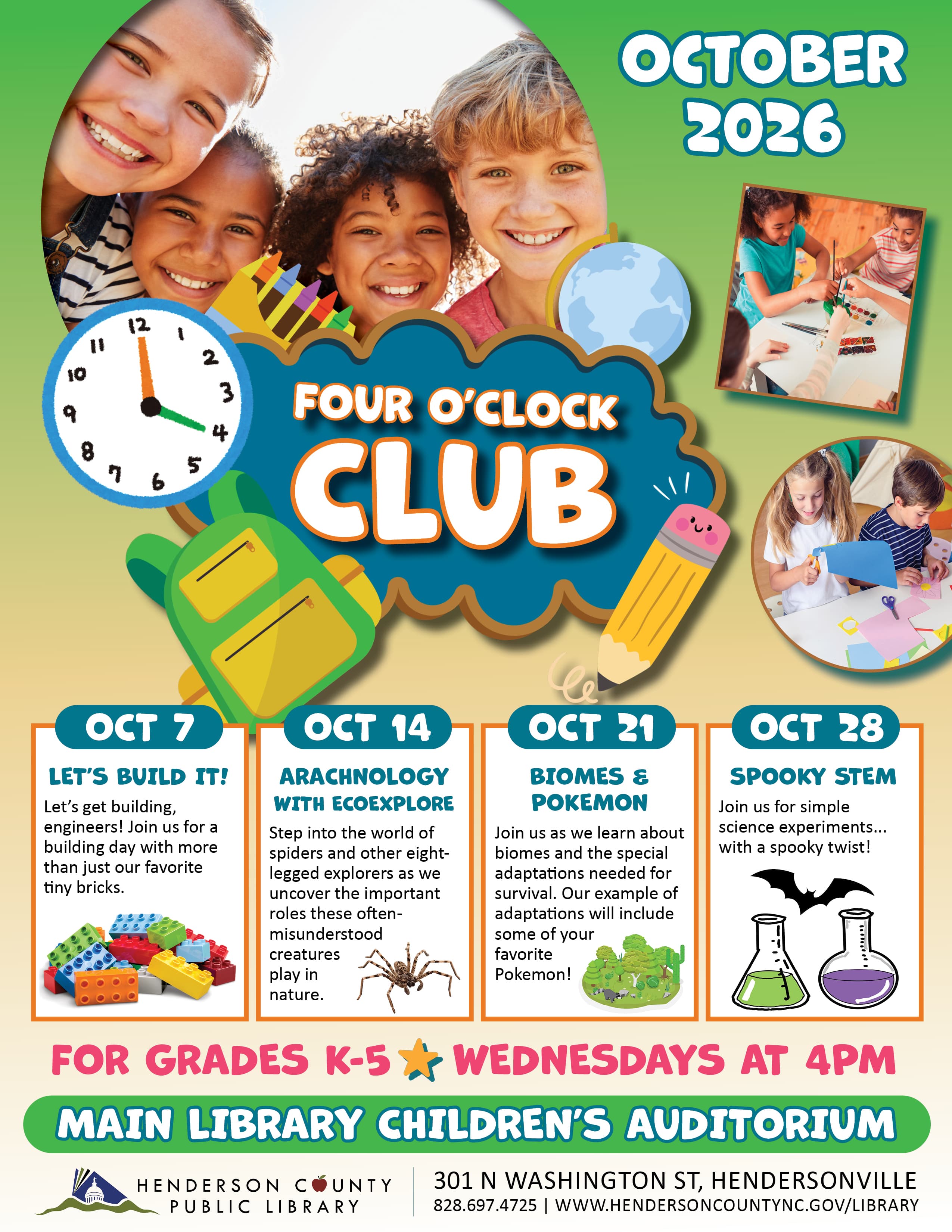
Four O'Clock Club: Arachnology with ecoEXPLORE
A child-focused introduction to spiders and other eight-legged creatures explores their ecological roles and challenges common misconceptions. Designed for elementary students, the program connects arachnology with nature learning.
Similar Events
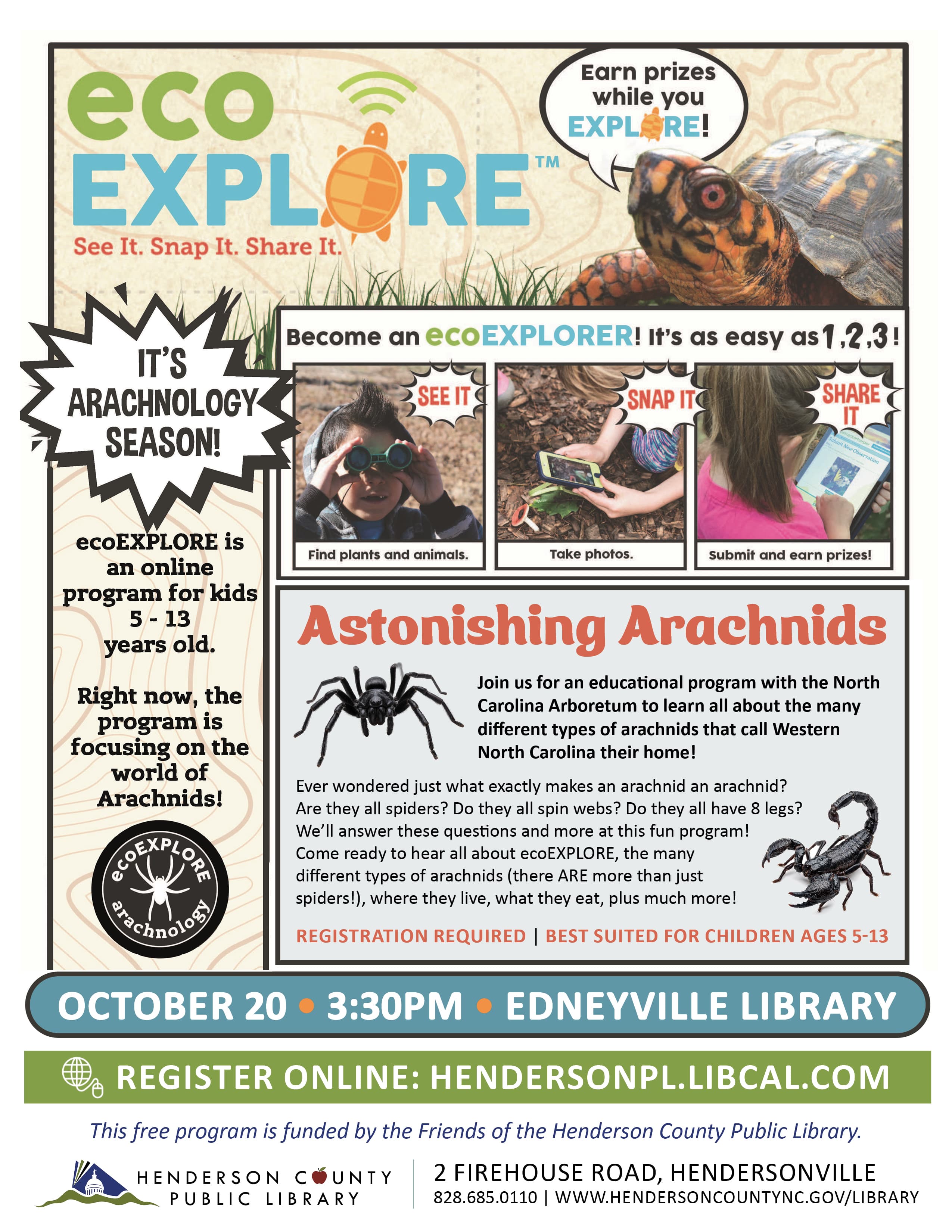
Explore what distinguishes arachnids from other creatures, discover the many kinds beyond spiders, and learn about their habitats and lives in Western North Carolina through a lively nature program.
Explore what distinguishes arachnids from other creatures, discover the many kinds beyond spiders, and learn about their habitats and lives in Western North Carolina through a lively nature program.
Explore what distinguishes arachnids from other creatures, discover the many kinds beyond spiders, and learn about their habitats and lives in Western North Carolina through a lively nature program.
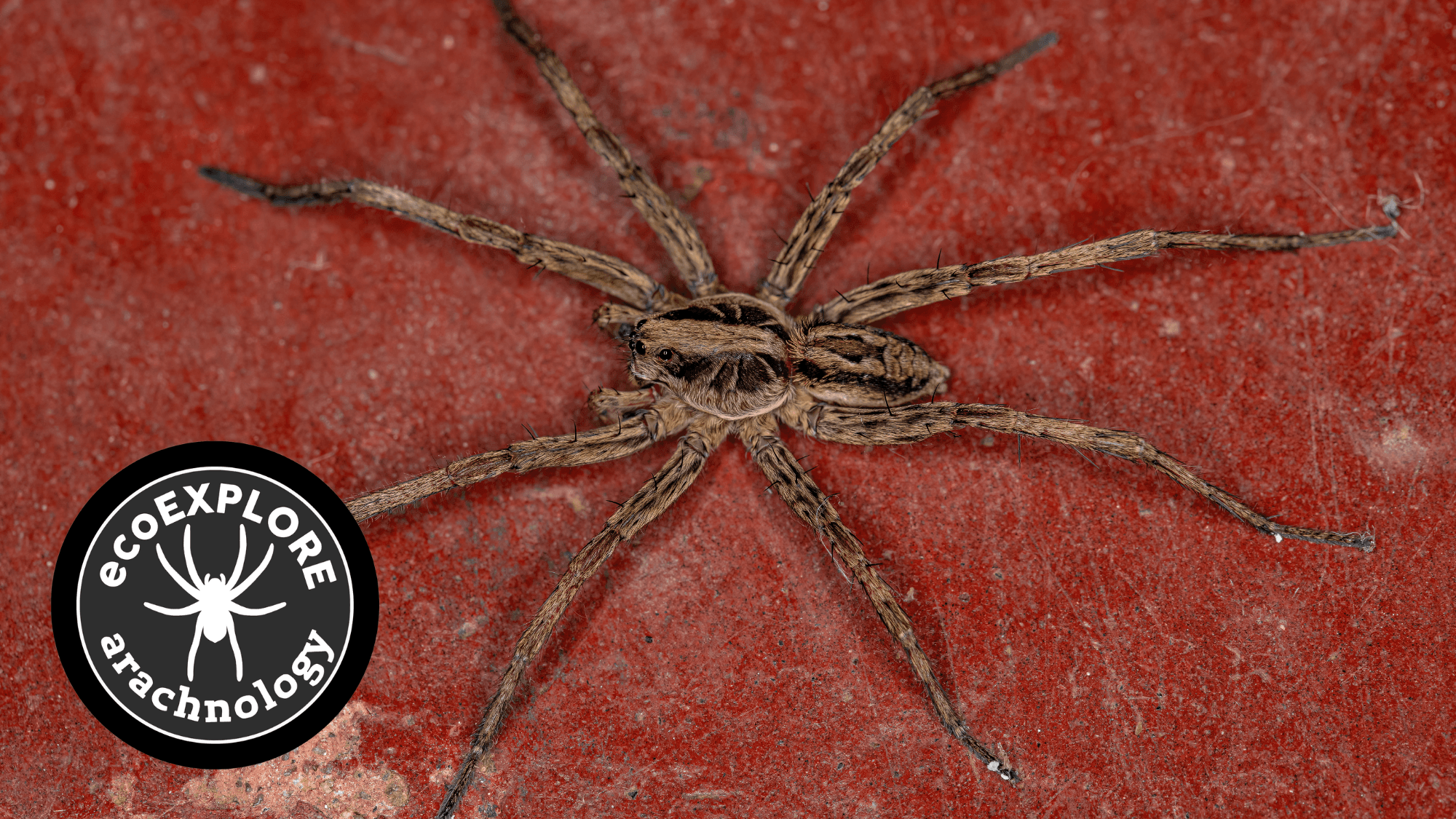
Explore Western North Carolina arachnids beyond spiders, learning how to identify them by their features and discover where they live. A fun, nature-focused program introduces local wildlife and ecoEXPLORE.
Explore Western North Carolina arachnids beyond spiders, learning how to identify them by their features and discover where they live. A fun, nature-focused program introduces local wildlife and ecoEXPLORE.
Explore Western North Carolina arachnids beyond spiders, learning how to identify them by their features and discover where they live. A fun, nature-focused program introduces local wildlife and ecoEXPLORE.
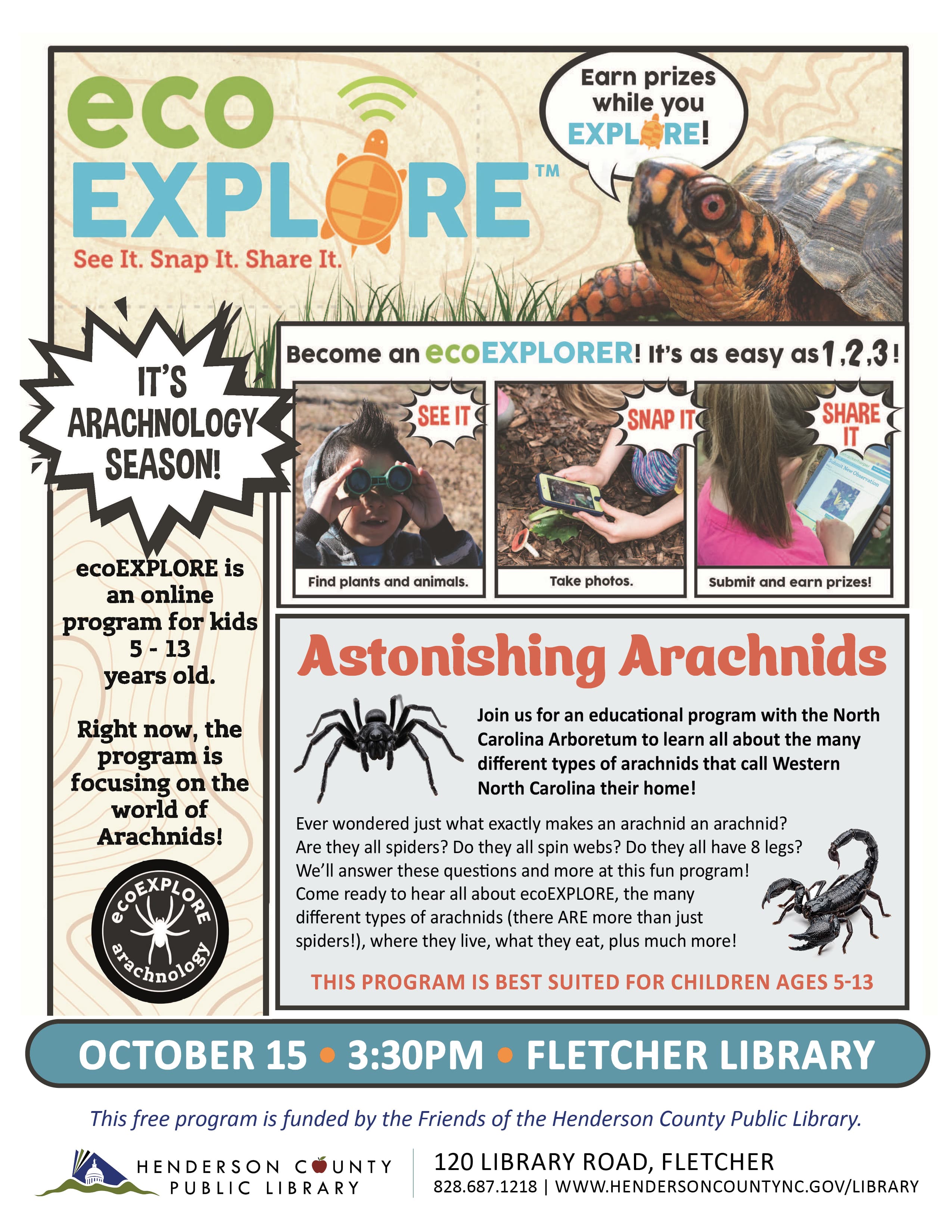
Explore the surprising diversity of Western North Carolina arachnids, from spiders to lesser-known eight-legged neighbors. Learn what defines them, where they live, and whether every arachnid spins a web.
Explore the surprising diversity of Western North Carolina arachnids, from spiders to lesser-known eight-legged neighbors. Learn what defines them, where they live, and whether every arachnid spins a web.
Explore the surprising diversity of Western North Carolina arachnids, from spiders to lesser-known eight-legged neighbors. Learn what defines them, where they live, and whether every arachnid spins a web.
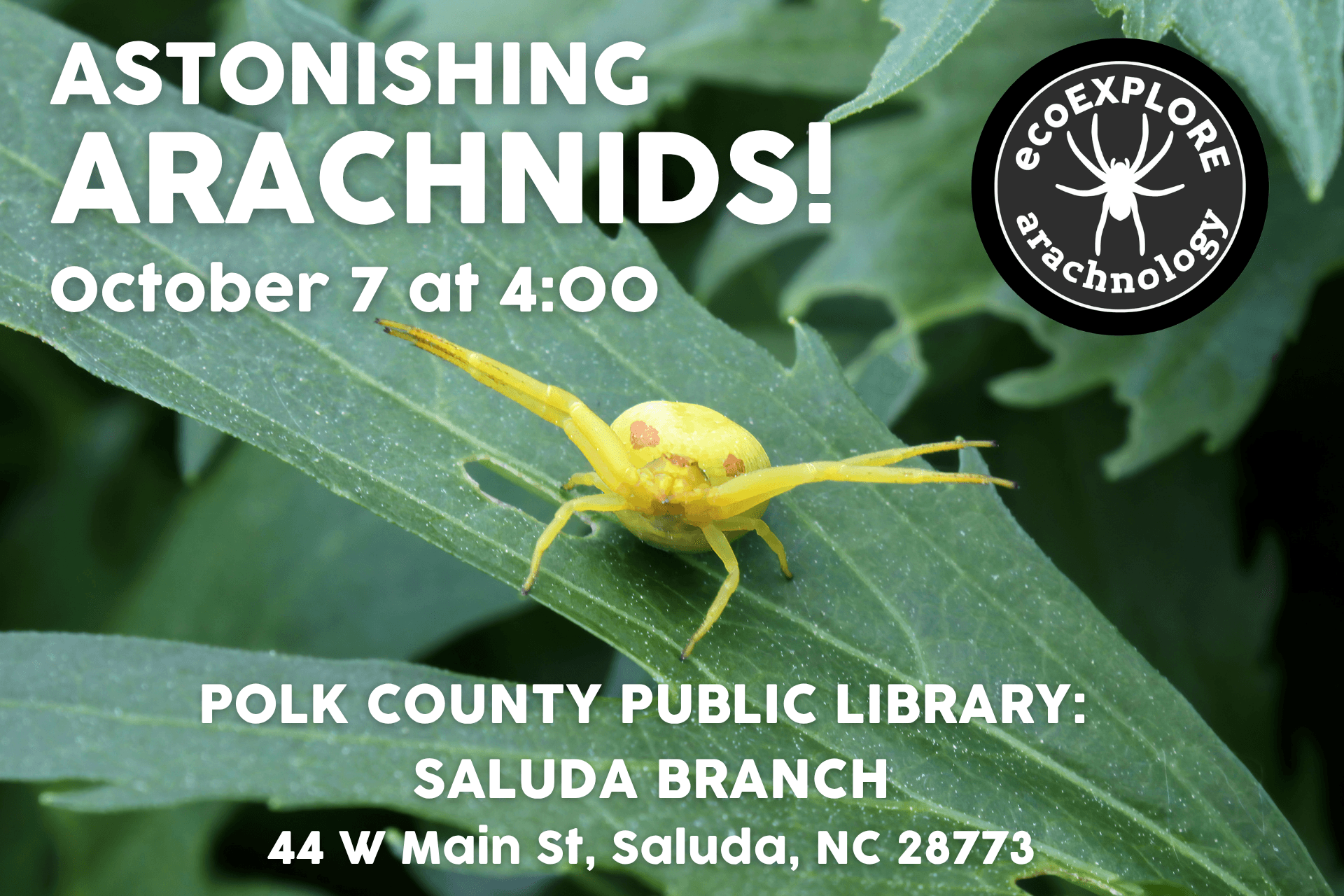
Explore Western North Carolina’s spiders and other arachnids through a lively natural history program covering identifying traits, habitats, web-making myths, and ecoEXPLORE citizen science for curious learners.
Explore Western North Carolina’s spiders and other arachnids through a lively natural history program covering identifying traits, habitats, web-making myths, and ecoEXPLORE citizen science for curious learners.
Explore Western North Carolina’s spiders and other arachnids through a lively natural history program covering identifying traits, habitats, web-making myths, and ecoEXPLORE citizen science for curious learners.
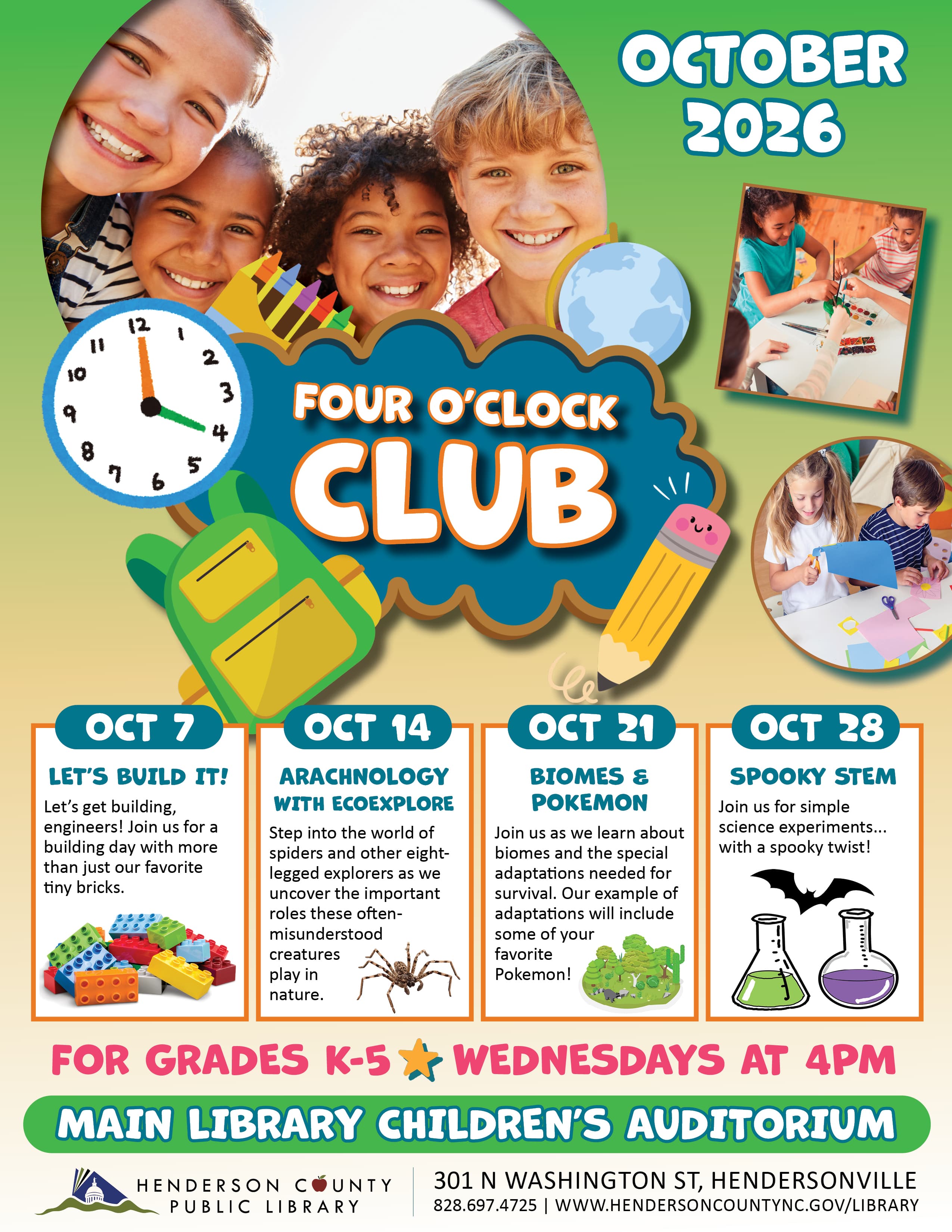
Hands-on science experiments bring a spooky twist to an after-school program for elementary students. Young learners in grades K–5 can explore STEM through simple, seasonal activities.
Hands-on science experiments bring a spooky twist to an after-school program for elementary students. Young learners in grades K–5 can explore STEM through simple, seasonal activities.
Hands-on science experiments bring a spooky twist to an after-school program for elementary students. Young learners in grades K–5 can explore STEM through simple, seasonal activities.
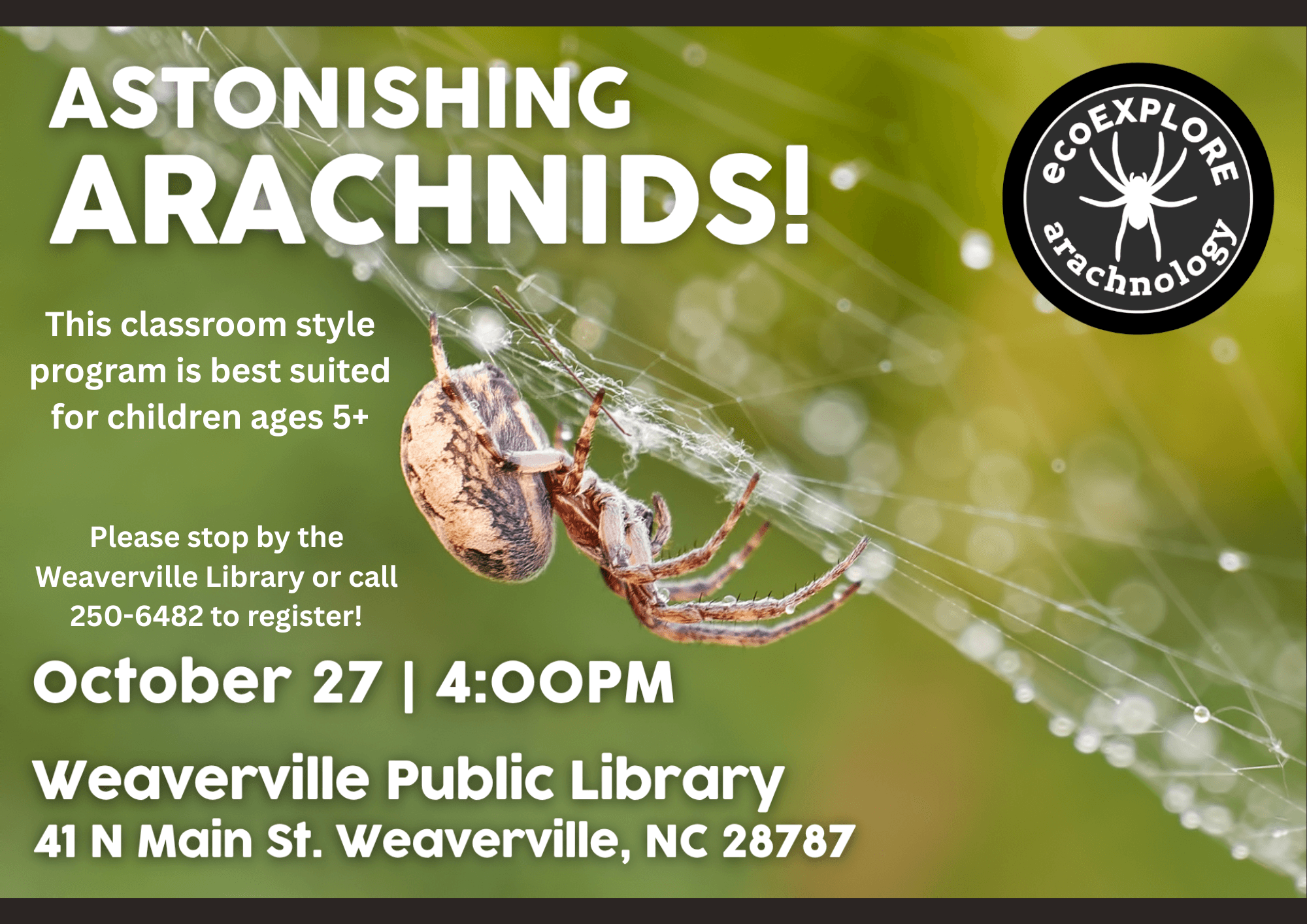
Explore the diverse arachnids of Western North Carolina and discover what distinguishes them from other creatures, where they live, and whether all spiders spin webs or have eight legs.
Explore the diverse arachnids of Western North Carolina and discover what distinguishes them from other creatures, where they live, and whether all spiders spin webs or have eight legs.
Explore the diverse arachnids of Western North Carolina and discover what distinguishes them from other creatures, where they live, and whether all spiders spin webs or have eight legs.
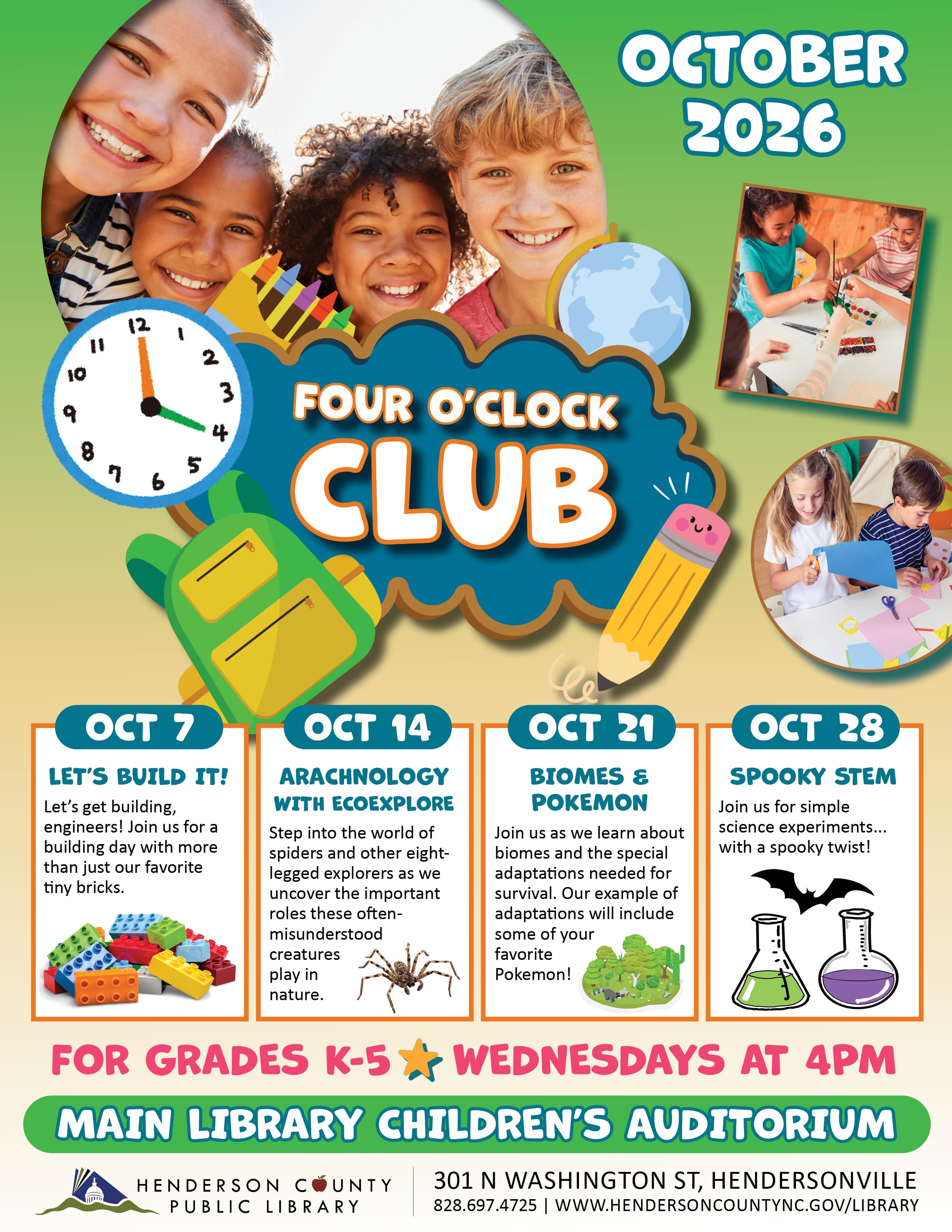
Explore forests, deserts, and other biomes while learning how plants and animals adapt to survive. Familiar Pokémon provide playful examples for elementary students in grades K–5.
Explore forests, deserts, and other biomes while learning how plants and animals adapt to survive. Familiar Pokémon provide playful examples for elementary students in grades K–5.
Explore forests, deserts, and other biomes while learning how plants and animals adapt to survive. Familiar Pokémon provide playful examples for elementary students in grades K–5.
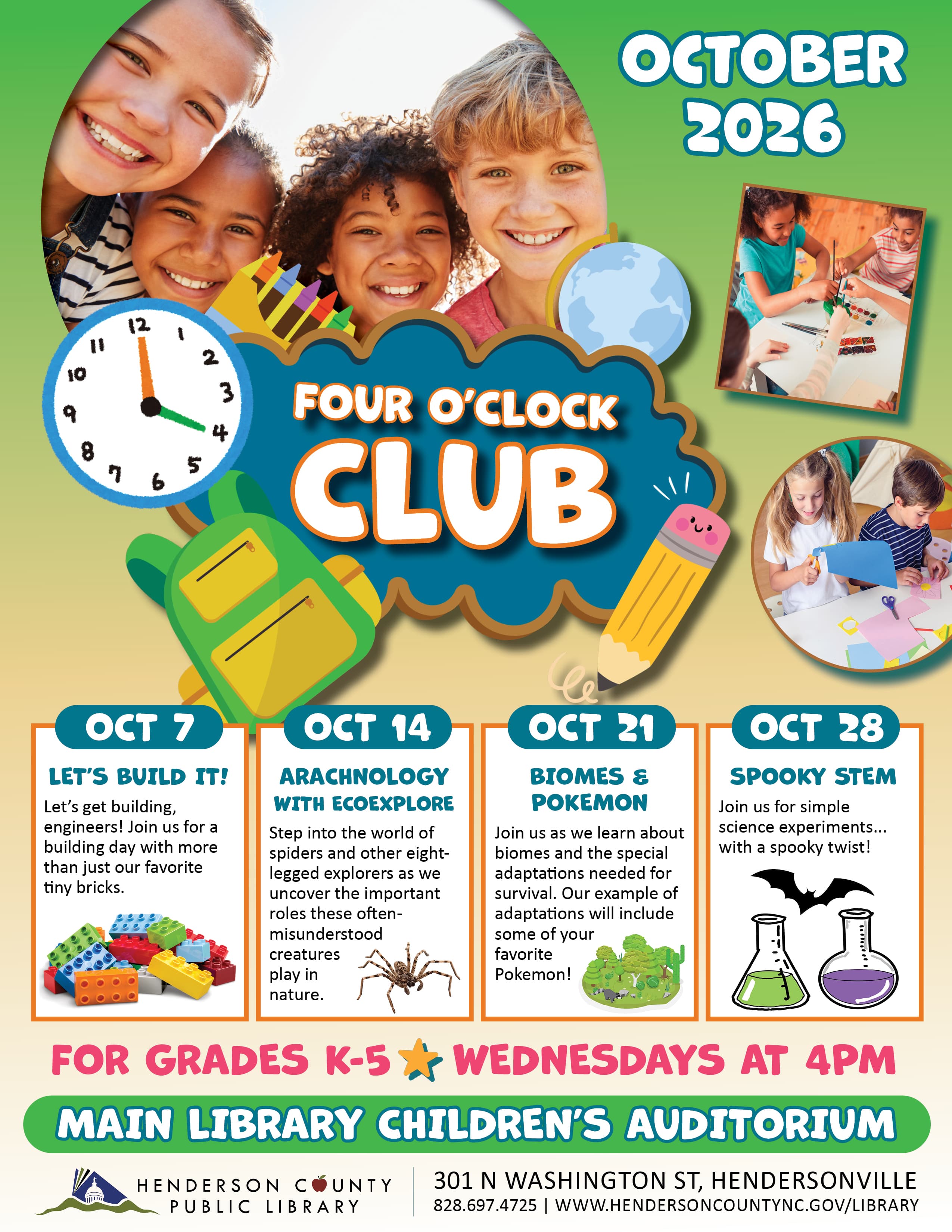
Young engineers in grades K–5 explore hands-on building challenges using materials beyond tiny bricks. A playful library program encourages creativity, problem-solving, and experimenting with how things fit together.
Young engineers in grades K–5 explore hands-on building challenges using materials beyond tiny bricks. A playful library program encourages creativity, problem-solving, and experimenting with how things fit together.
Young engineers in grades K–5 explore hands-on building challenges using materials beyond tiny bricks. A playful library program encourages creativity, problem-solving, and experimenting with how things fit together.
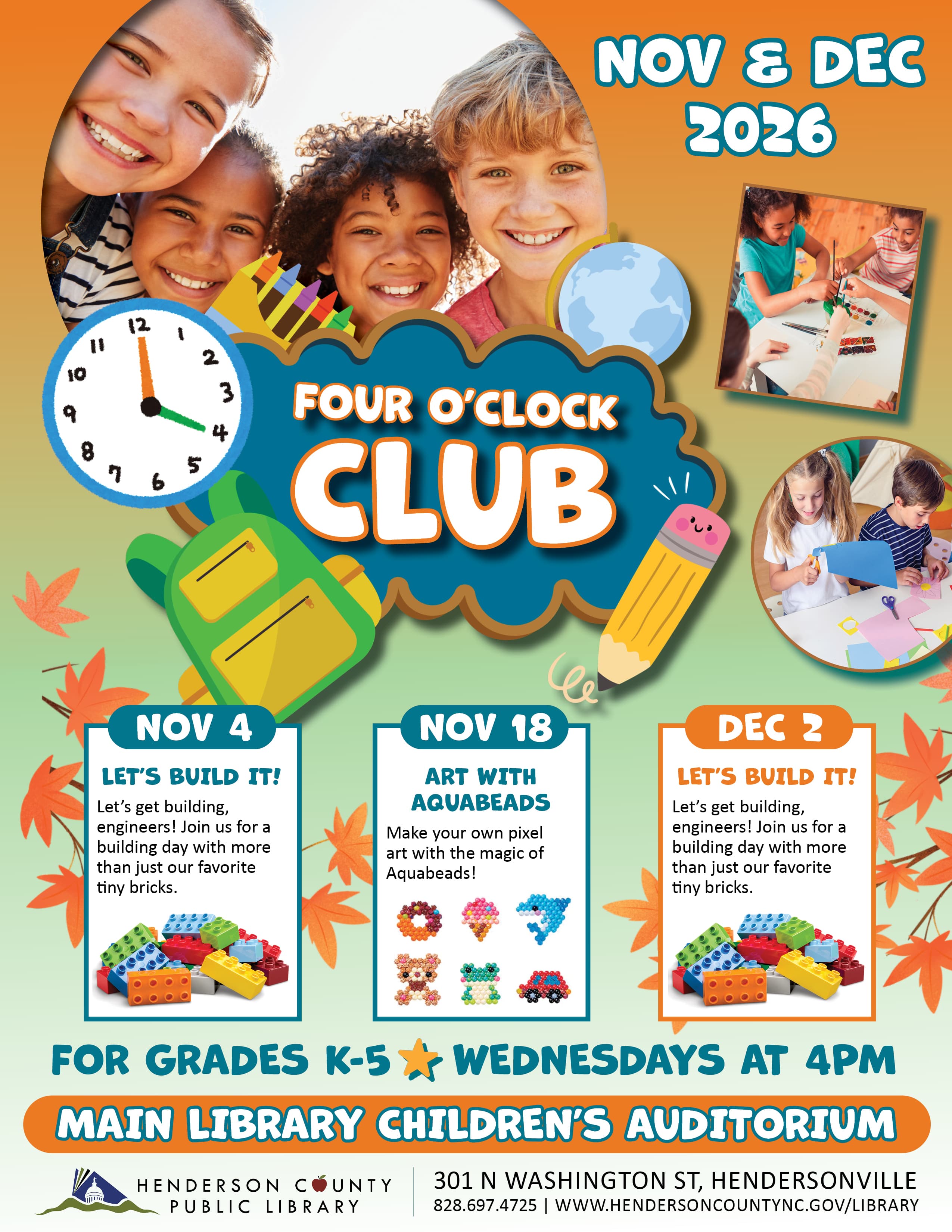
Children in grades K–5 create colorful pixel art with Aquabeads, arranging tiny beads into playful designs in a hands-on, creative activity for elementary-age makers.
Children in grades K–5 create colorful pixel art with Aquabeads, arranging tiny beads into playful designs in a hands-on, creative activity for elementary-age makers.
Children in grades K–5 create colorful pixel art with Aquabeads, arranging tiny beads into playful designs in a hands-on, creative activity for elementary-age makers.

Explore how native plants sustain pollinators, strengthen local ecosystems, and benefit everyday life through an informative slide presentation on ecological gardening and biodiversity in Western North Carolina.
Explore how native plants sustain pollinators, strengthen local ecosystems, and benefit everyday life through an informative slide presentation on ecological gardening and biodiversity in Western North Carolina.
Explore how native plants sustain pollinators, strengthen local ecosystems, and benefit everyday life through an informative slide presentation on ecological gardening and biodiversity in Western North Carolina.
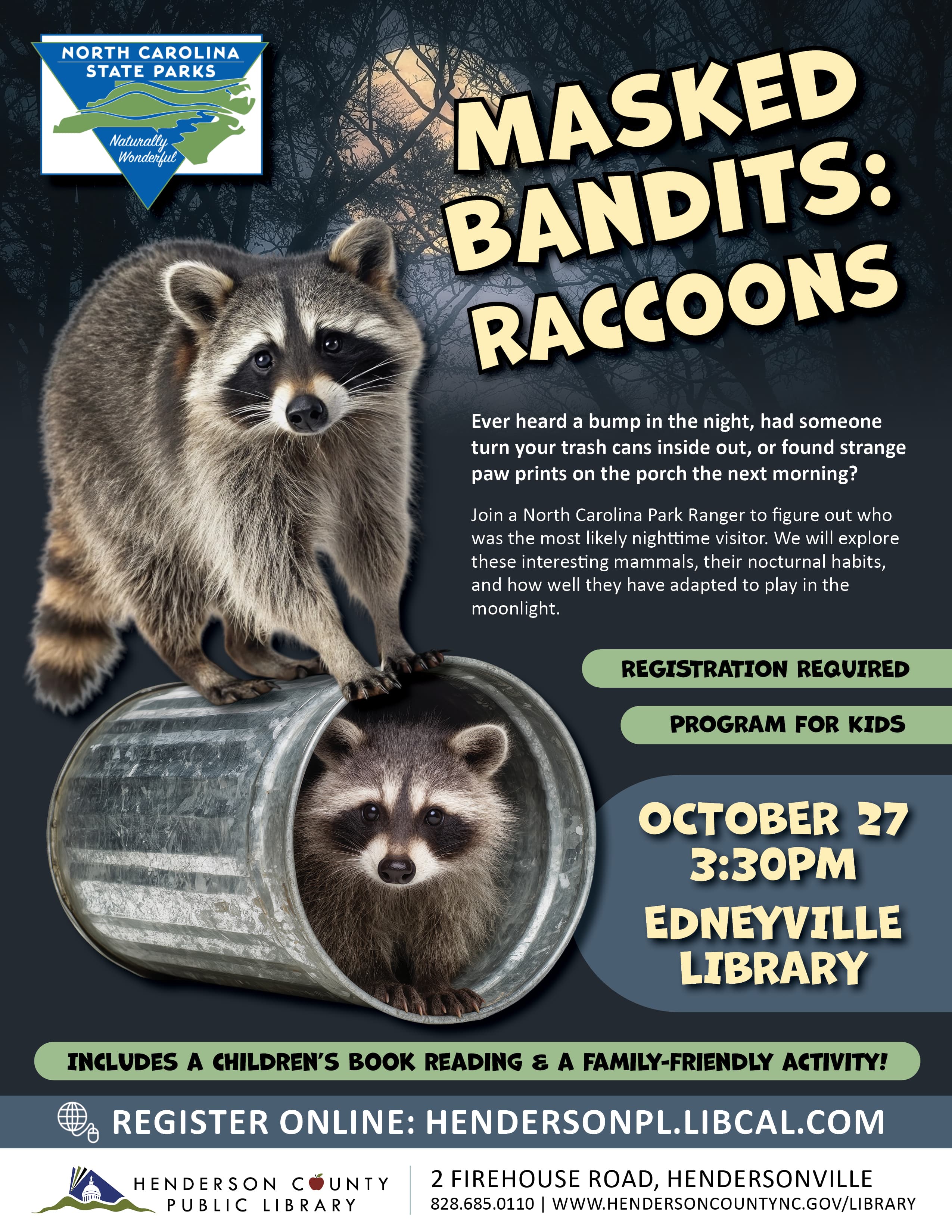
Explore raccoon behavior, nighttime habits, and adaptations with a North Carolina Park Ranger through an engaging nature program. A children’s book reading and hands-on activity welcome families and curious learners of all ages.
Explore raccoon behavior, nighttime habits, and adaptations with a North Carolina Park Ranger through an engaging nature program. A children’s book reading and hands-on activity welcome families and curious learners of all ages.
Explore raccoon behavior, nighttime habits, and adaptations with a North Carolina Park Ranger through an engaging nature program. A children’s book reading and hands-on activity welcome families and curious learners of all ages.
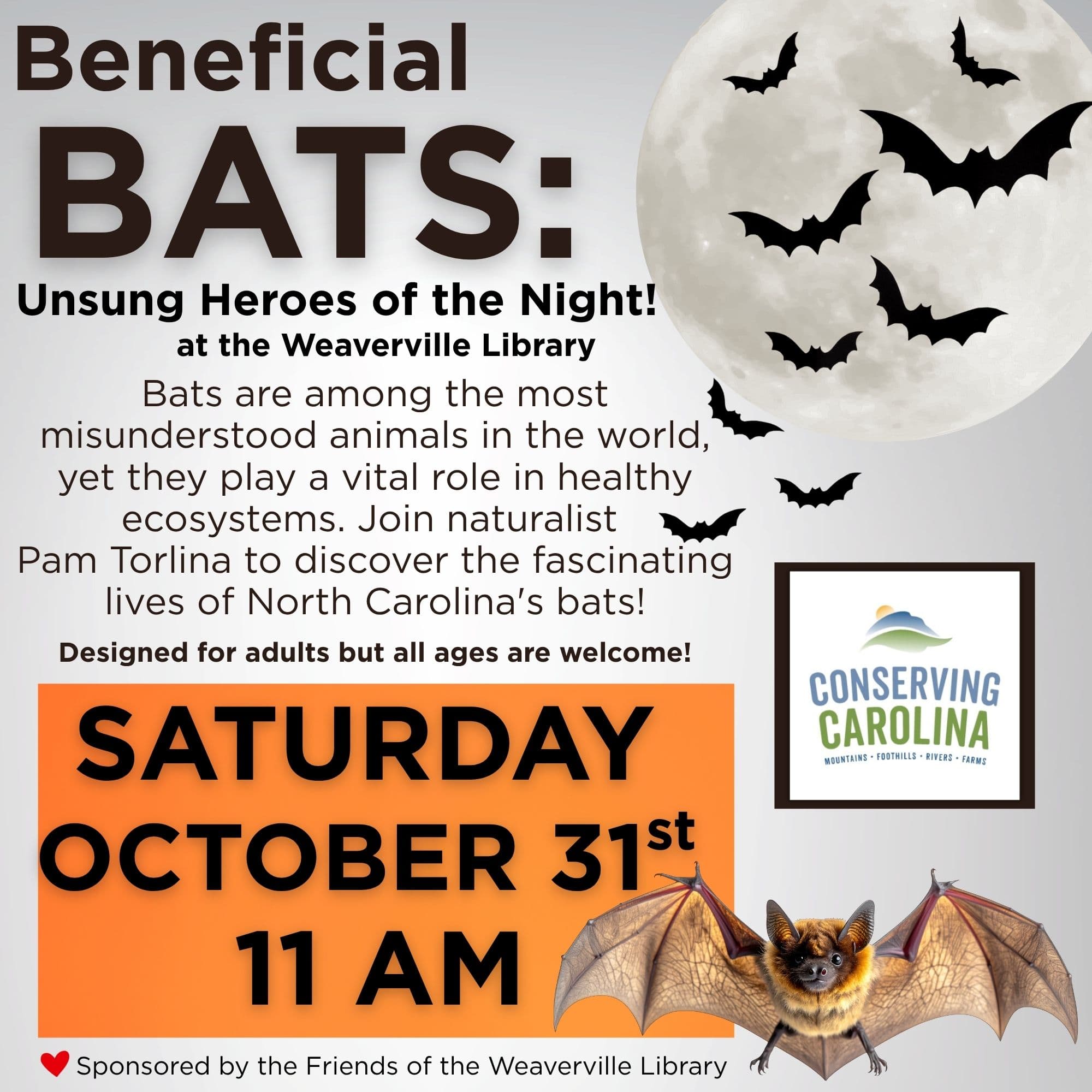
Explore the fascinating lives of North Carolina’s bats, their role in controlling insect populations, and the challenges threatening these misunderstood nighttime neighbors. Learn practical ways to support local bat conservation.
Explore the fascinating lives of North Carolina’s bats, their role in controlling insect populations, and the challenges threatening these misunderstood nighttime neighbors. Learn practical ways to support local bat conservation.
Explore the fascinating lives of North Carolina’s bats, their role in controlling insect populations, and the challenges threatening these misunderstood nighttime neighbors. Learn practical ways to support local bat conservation.
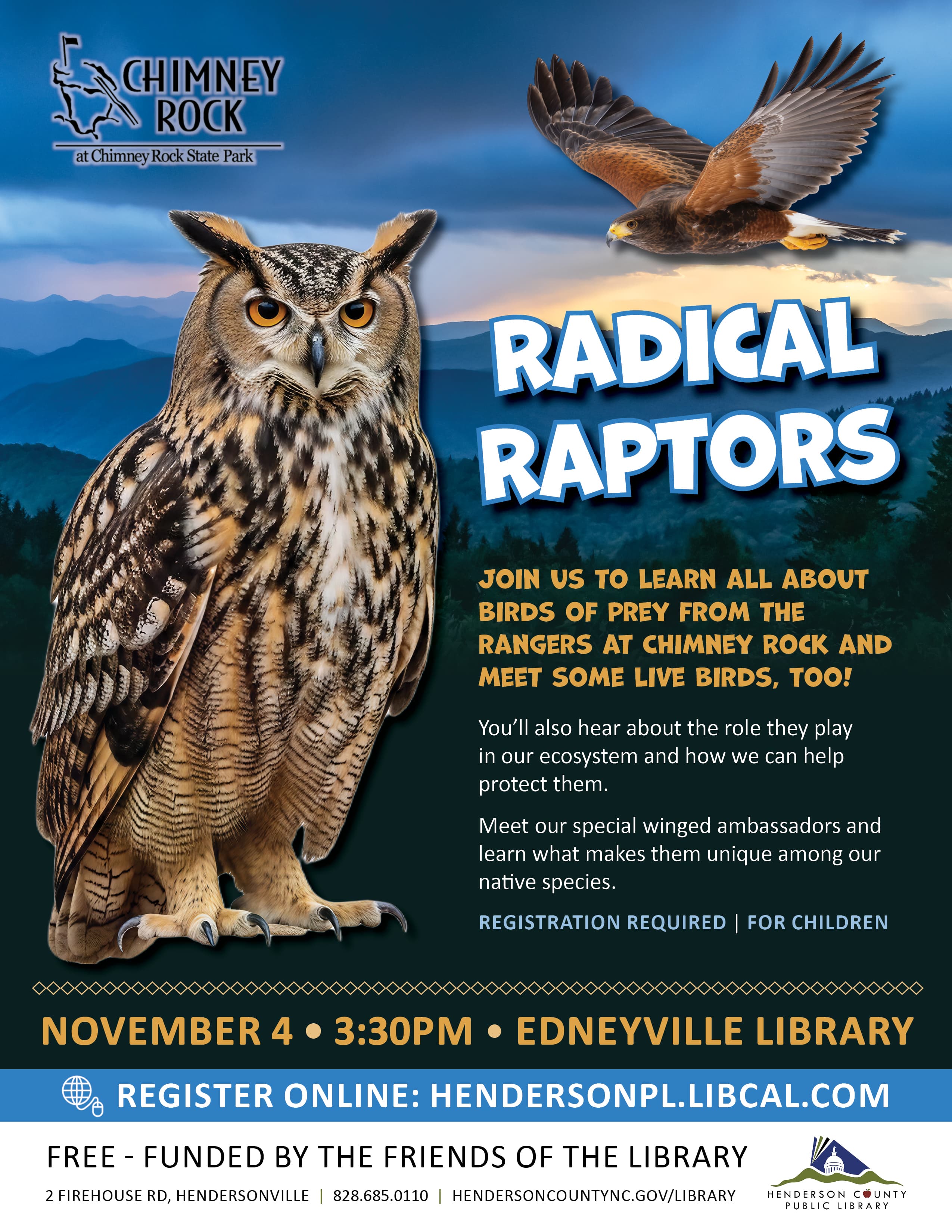
Meet live native birds of prey and discover their distinctive adaptations, ecological roles, and conservation needs. Rangers share ways children and families can help protect these winged ambassadors.
Meet live native birds of prey and discover their distinctive adaptations, ecological roles, and conservation needs. Rangers share ways children and families can help protect these winged ambassadors.
Meet live native birds of prey and discover their distinctive adaptations, ecological roles, and conservation needs. Rangers share ways children and families can help protect these winged ambassadors.
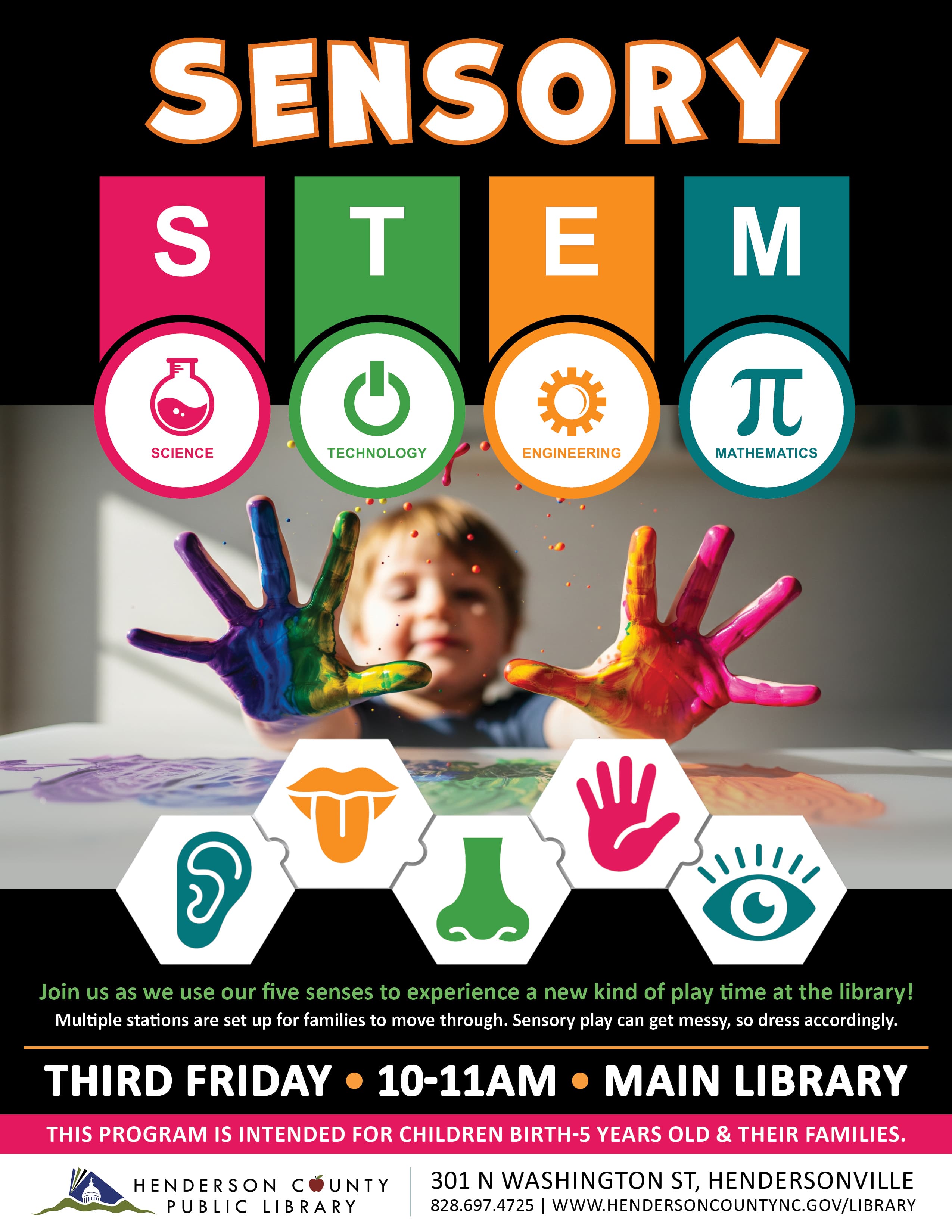
Hands-on sensory stations invite babies, toddlers, preschoolers, and caregivers to explore early STEM through sight, sound, touch, taste, and smell. Expect playful, potentially messy activities designed for family participation.
Hands-on sensory stations invite babies, toddlers, preschoolers, and caregivers to explore early STEM through sight, sound, touch, taste, and smell. Expect playful, potentially messy activities designed for family participation.
Hands-on sensory stations invite babies, toddlers, preschoolers, and caregivers to explore early STEM through sight, sound, touch, taste, and smell. Expect playful, potentially messy activities designed for family participation.
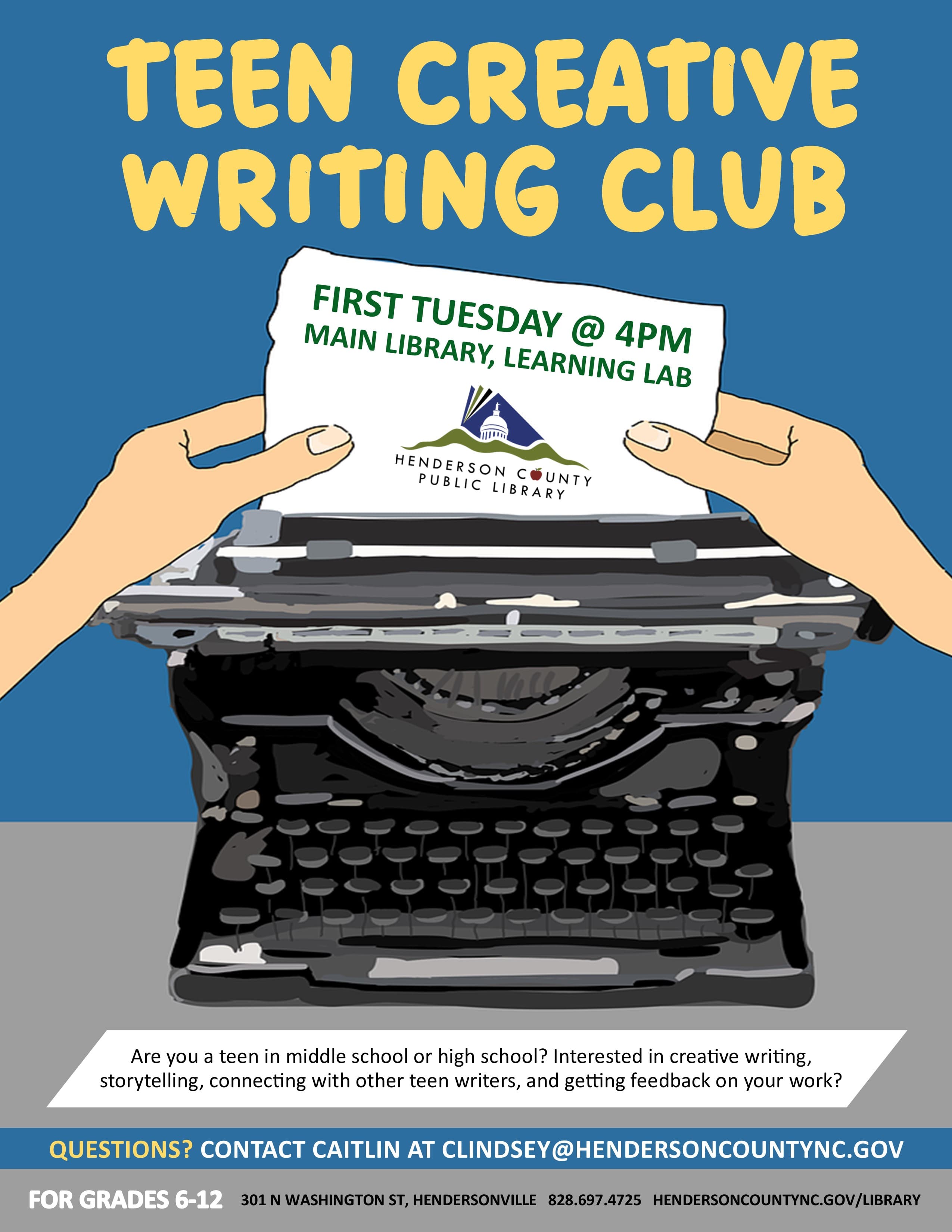
Monthly creative writing sessions bring middle and high school students together to develop stories, share original work, exchange peer feedback, and connect with fellow young writers.
Monthly creative writing sessions bring middle and high school students together to develop stories, share original work, exchange peer feedback, and connect with fellow young writers.
Monthly creative writing sessions bring middle and high school students together to develop stories, share original work, exchange peer feedback, and connect with fellow young writers.
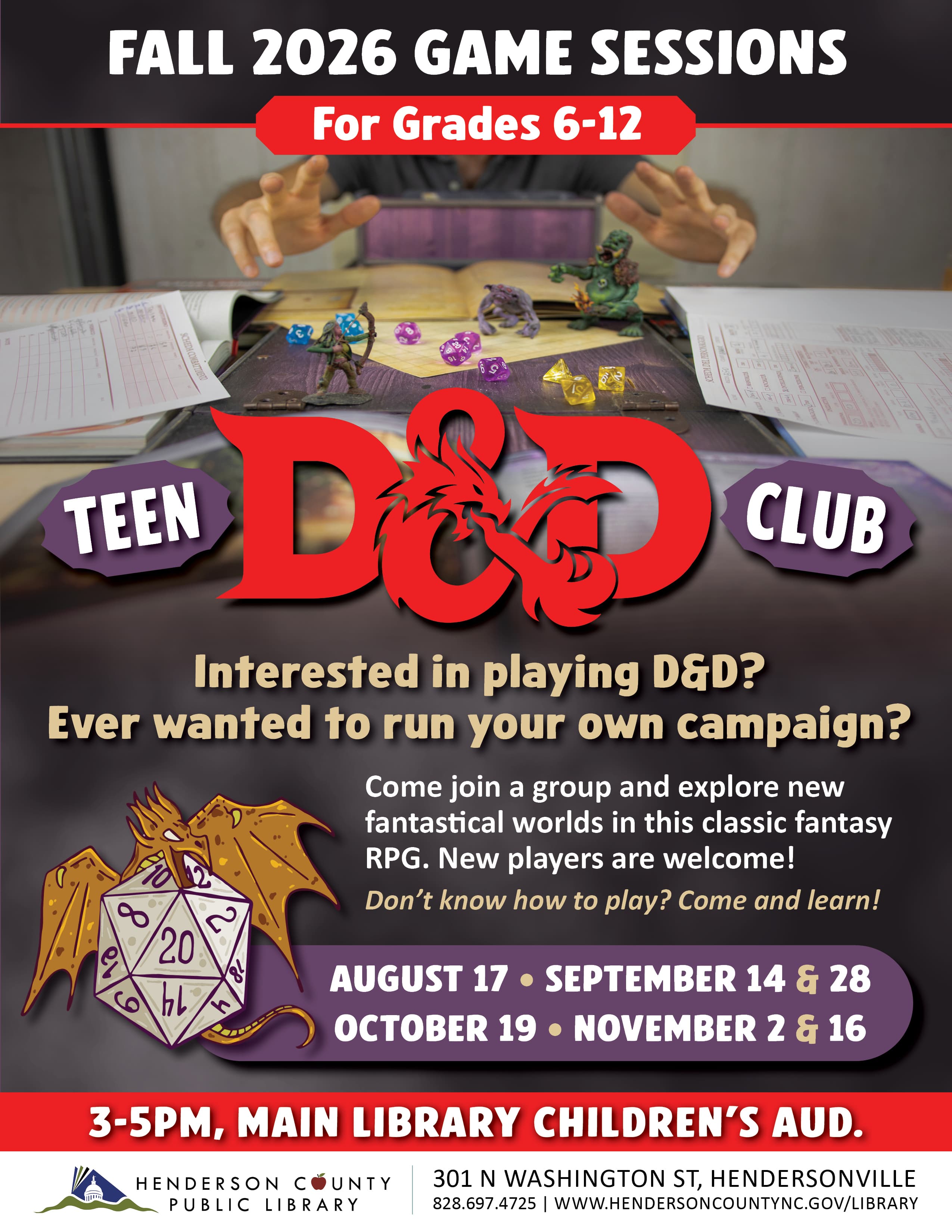
Explore fantastical worlds through collaborative storytelling, character creation, and classic Dungeons & Dragons gameplay. Teens in grades 6–12 can learn the rules, join a campaign, or try running one.
Explore fantastical worlds through collaborative storytelling, character creation, and classic Dungeons & Dragons gameplay. Teens in grades 6–12 can learn the rules, join a campaign, or try running one.
Explore fantastical worlds through collaborative storytelling, character creation, and classic Dungeons & Dragons gameplay. Teens in grades 6–12 can learn the rules, join a campaign, or try running one.
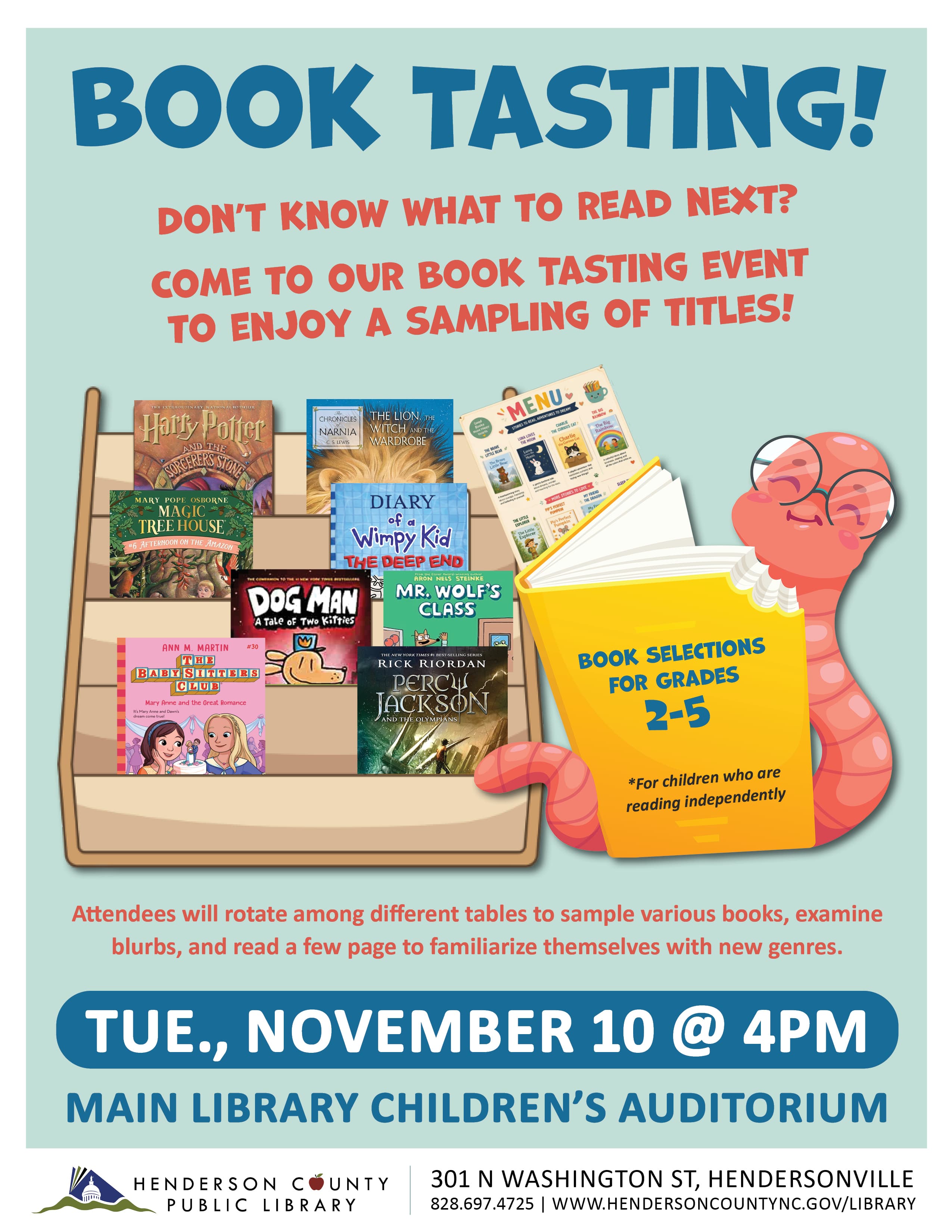
Young independent readers in grades 2–5 rotate through book tables, sampling blurbs and first pages to discover new genres and find engaging next reads.
Young independent readers in grades 2–5 rotate through book tables, sampling blurbs and first pages to discover new genres and find engaging next reads.
Young independent readers in grades 2–5 rotate through book tables, sampling blurbs and first pages to discover new genres and find engaging next reads.
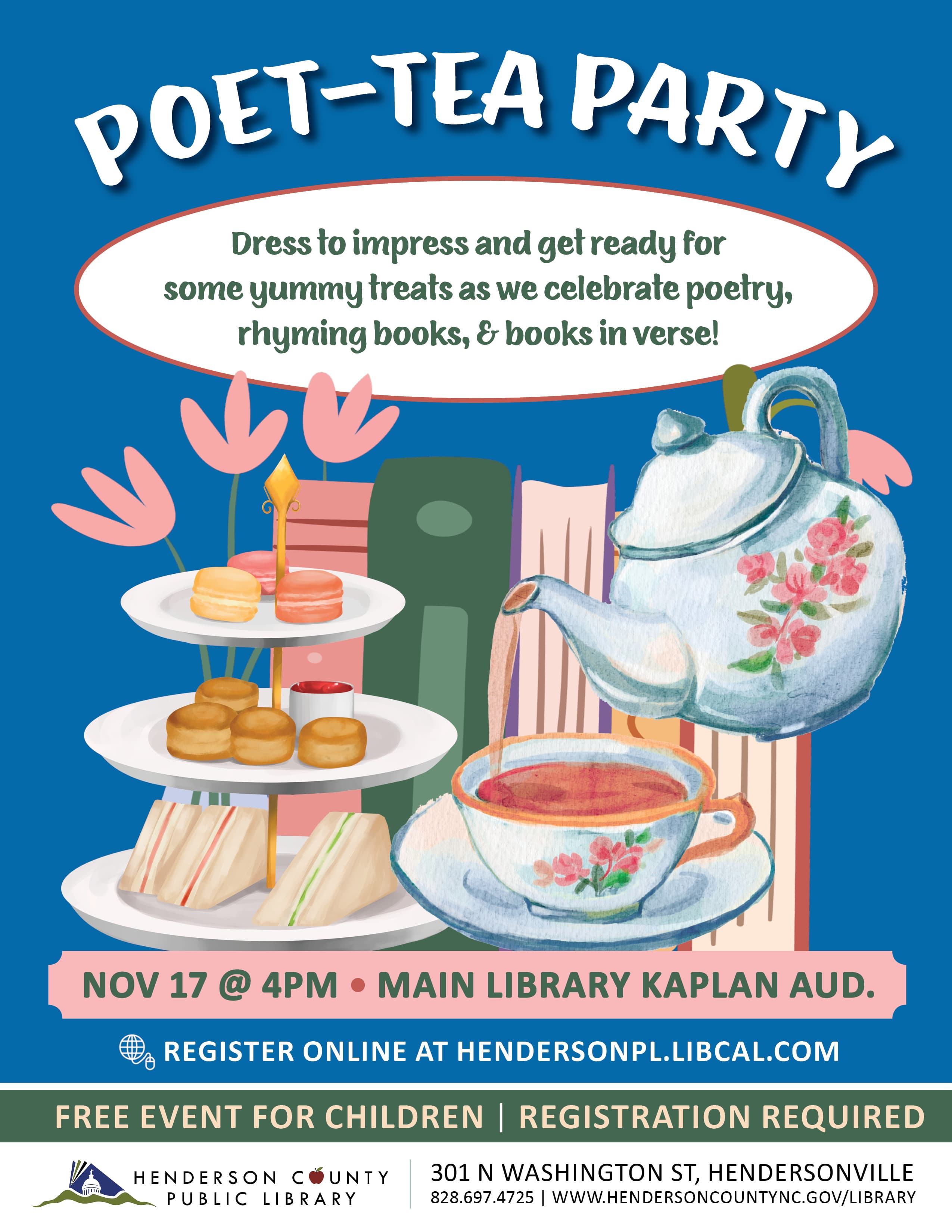
Celebrate poetry, rhyming books, and stories written in verse at a dress-up gathering for children, with yummy treats and a festive tea party atmosphere.
Celebrate poetry, rhyming books, and stories written in verse at a dress-up gathering for children, with yummy treats and a festive tea party atmosphere.
Celebrate poetry, rhyming books, and stories written in verse at a dress-up gathering for children, with yummy treats and a festive tea party atmosphere.
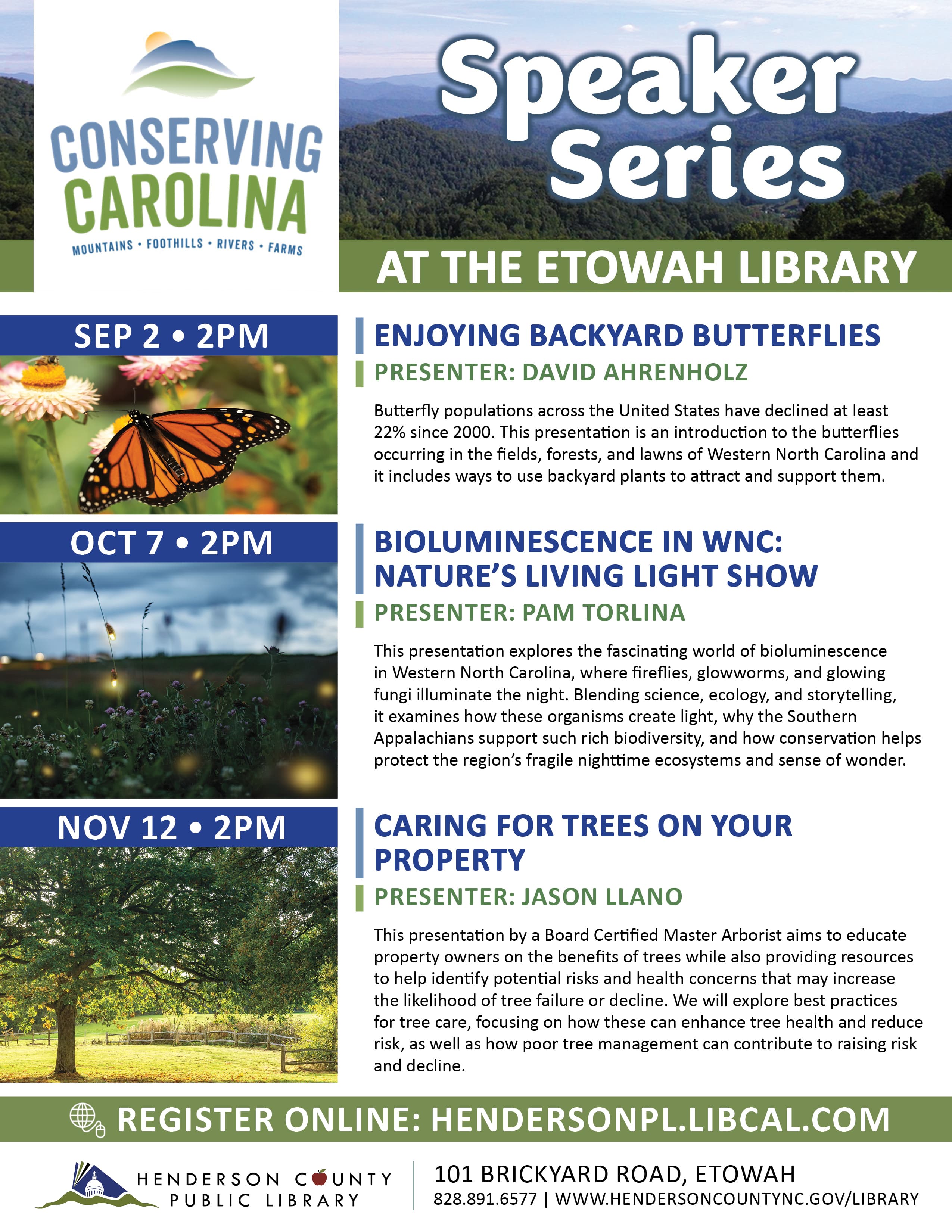
Explore the science behind fireflies, glowworms, and luminous fungi, with stories of Southern Appalachian biodiversity and fragile nighttime ecosystems. Learn how conservation protects these living light shows and regional ecological wonder.
Explore the science behind fireflies, glowworms, and luminous fungi, with stories of Southern Appalachian biodiversity and fragile nighttime ecosystems. Learn how conservation protects these living light shows and regional ecological wonder.
Explore the science behind fireflies, glowworms, and luminous fungi, with stories of Southern Appalachian biodiversity and fragile nighttime ecosystems. Learn how conservation protects these living light shows and regional ecological wonder.
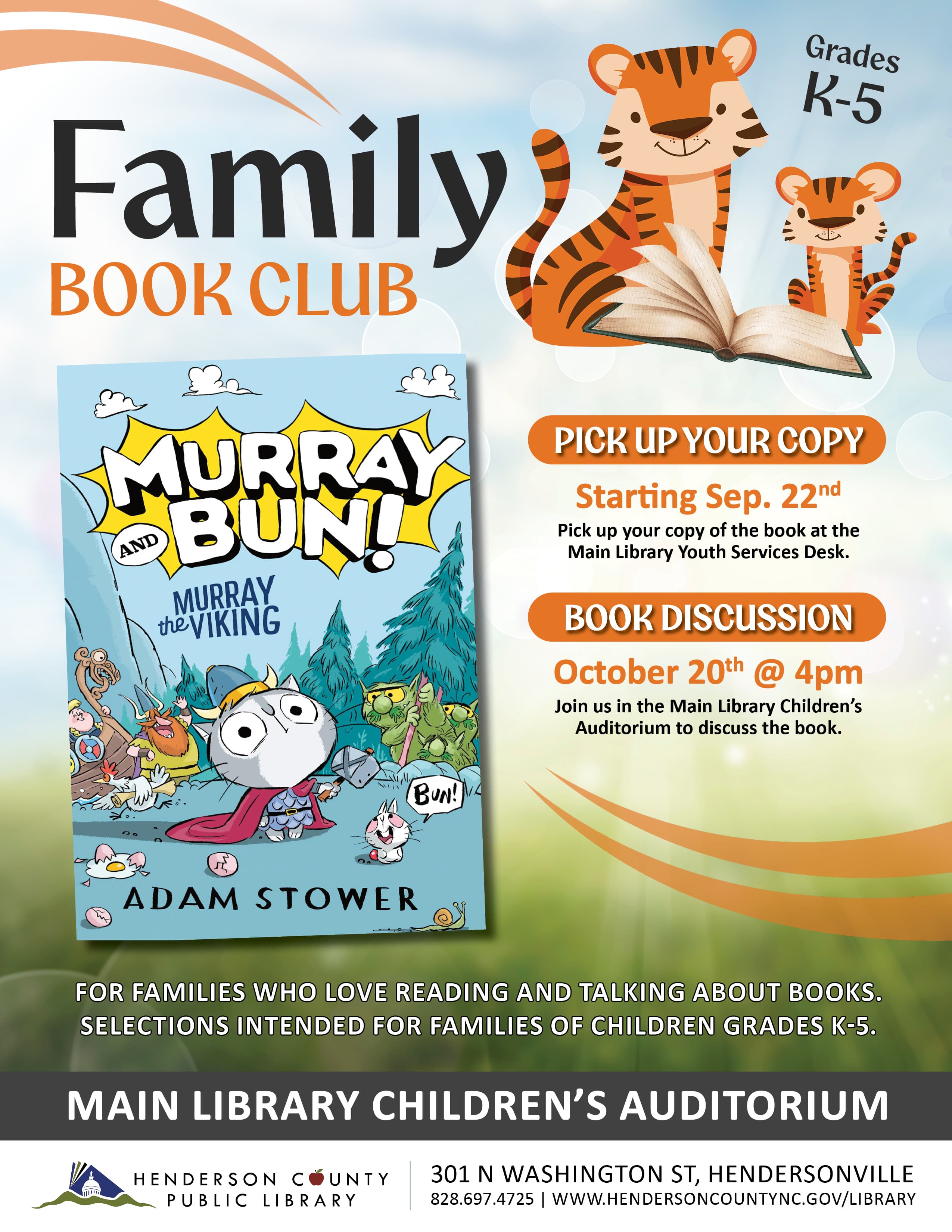
Families and elementary readers discuss Murray the Viking by Adam Stower, sharing reactions to the book in a welcoming K–5 reading group. Copies are available ahead of the discussion.
Families and elementary readers discuss Murray the Viking by Adam Stower, sharing reactions to the book in a welcoming K–5 reading group. Copies are available ahead of the discussion.
Families and elementary readers discuss Murray the Viking by Adam Stower, sharing reactions to the book in a welcoming K–5 reading group. Copies are available ahead of the discussion.