
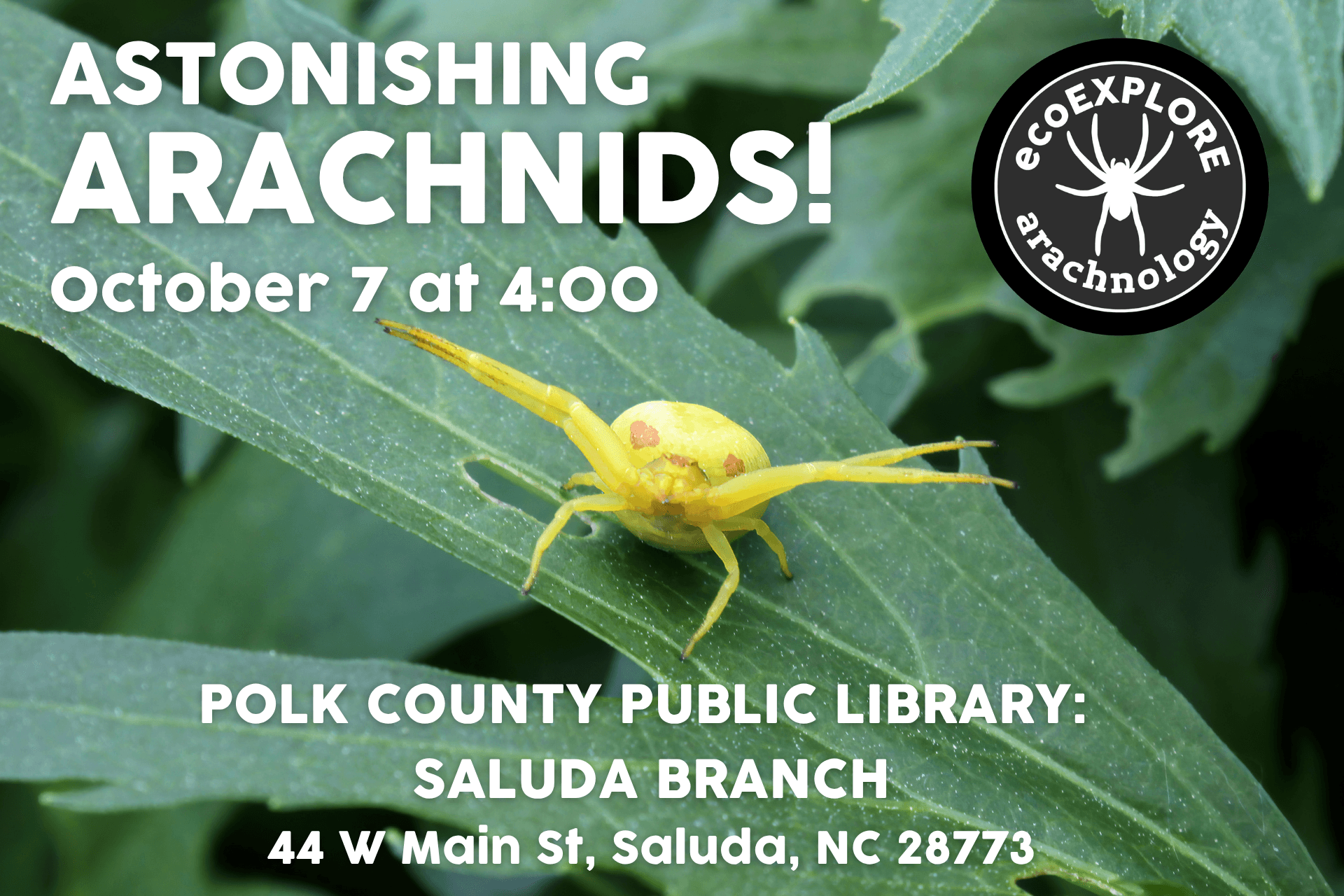
Astonishing Arachnids
Explore Western North Carolina’s spiders and other arachnids through a lively natural history program covering identifying traits, habitats, web-making myths, and ecoEXPLORE citizen science for curious learners.
Similar Events
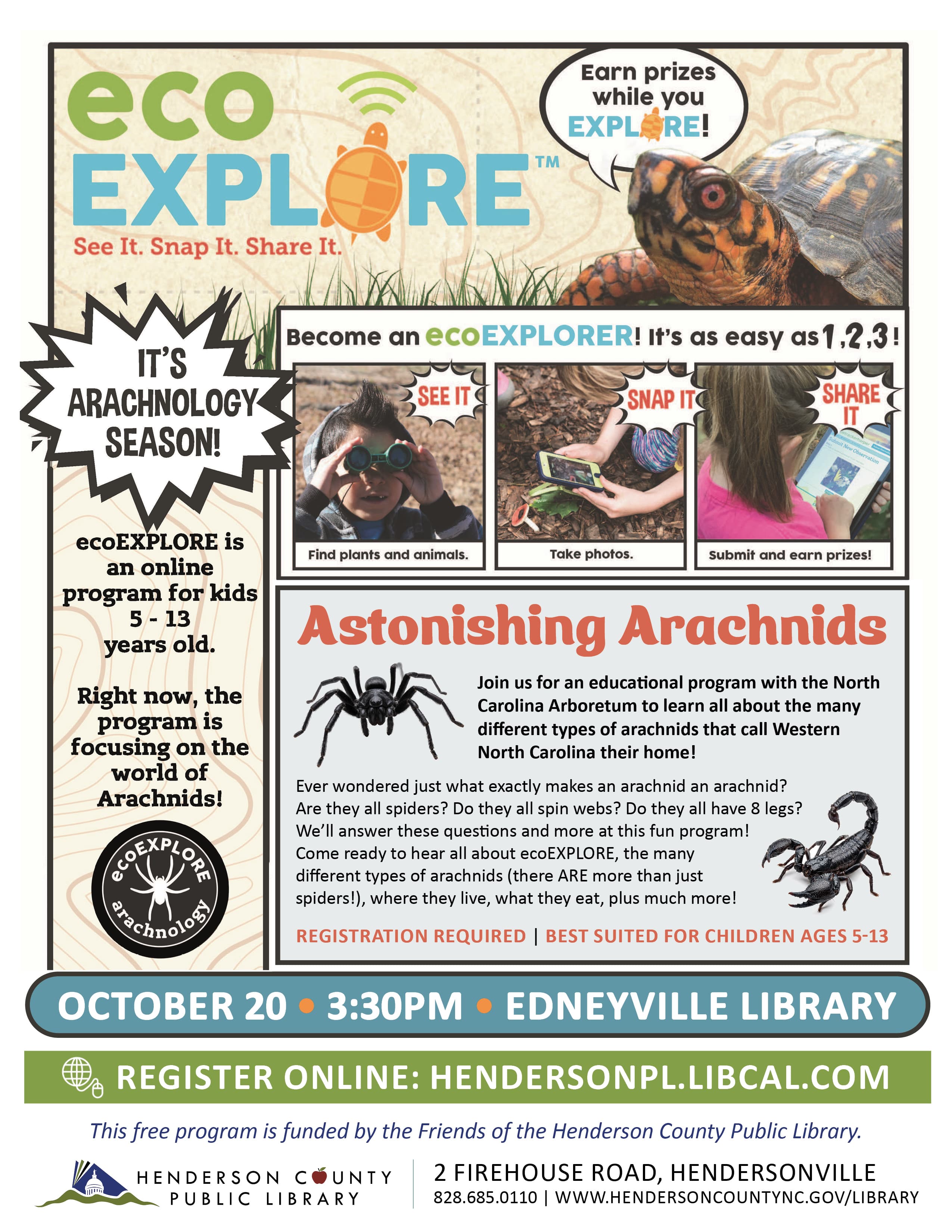
Explore what distinguishes arachnids from other creatures, discover the many kinds beyond spiders, and learn about their habitats and lives in Western North Carolina through a lively nature program.
Explore what distinguishes arachnids from other creatures, discover the many kinds beyond spiders, and learn about their habitats and lives in Western North Carolina through a lively nature program.
Explore what distinguishes arachnids from other creatures, discover the many kinds beyond spiders, and learn about their habitats and lives in Western North Carolina through a lively nature program.
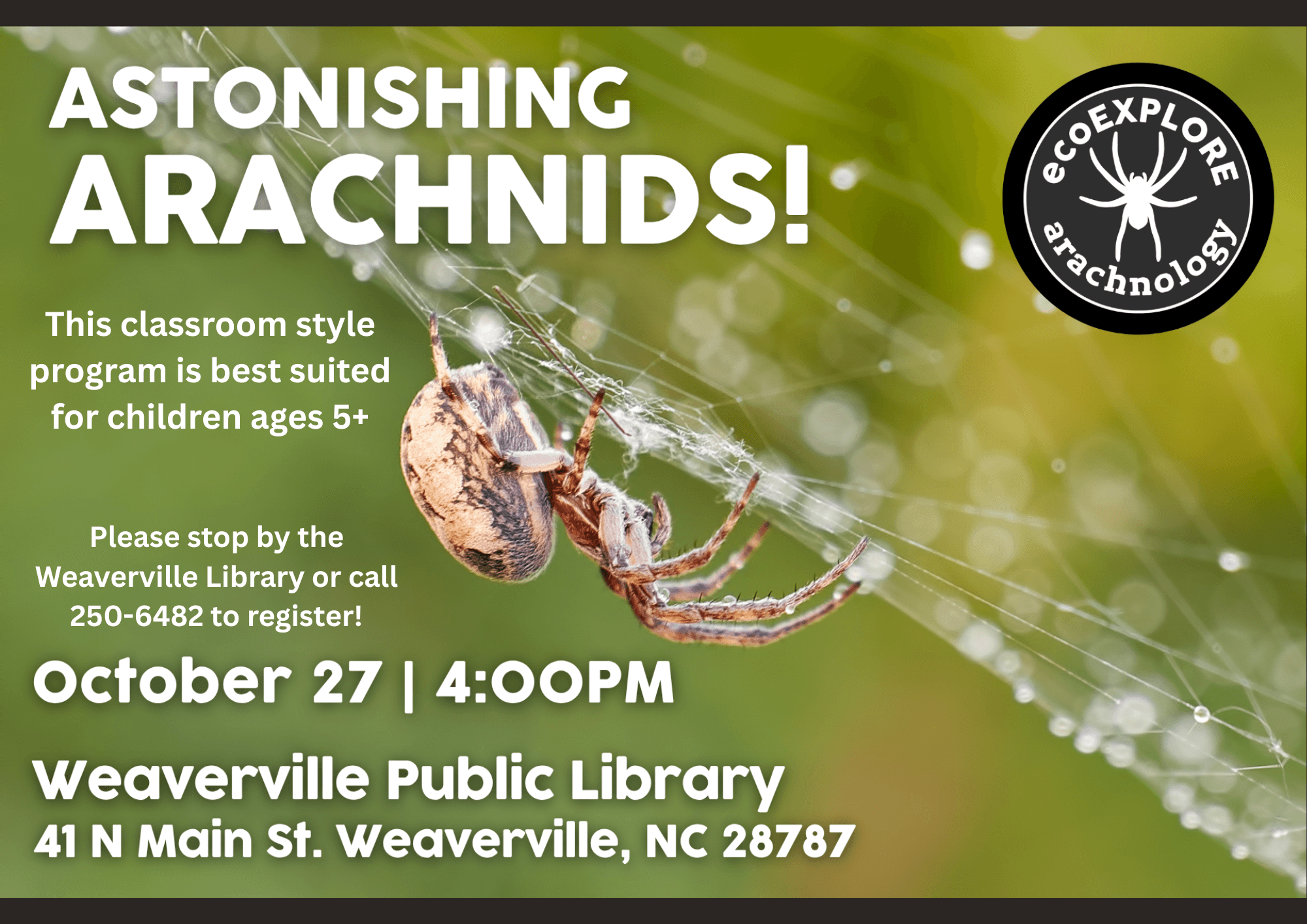
Explore the diverse arachnids of Western North Carolina and discover what distinguishes them from other creatures, where they live, and whether all spiders spin webs or have eight legs.
Explore the diverse arachnids of Western North Carolina and discover what distinguishes them from other creatures, where they live, and whether all spiders spin webs or have eight legs.
Explore the diverse arachnids of Western North Carolina and discover what distinguishes them from other creatures, where they live, and whether all spiders spin webs or have eight legs.
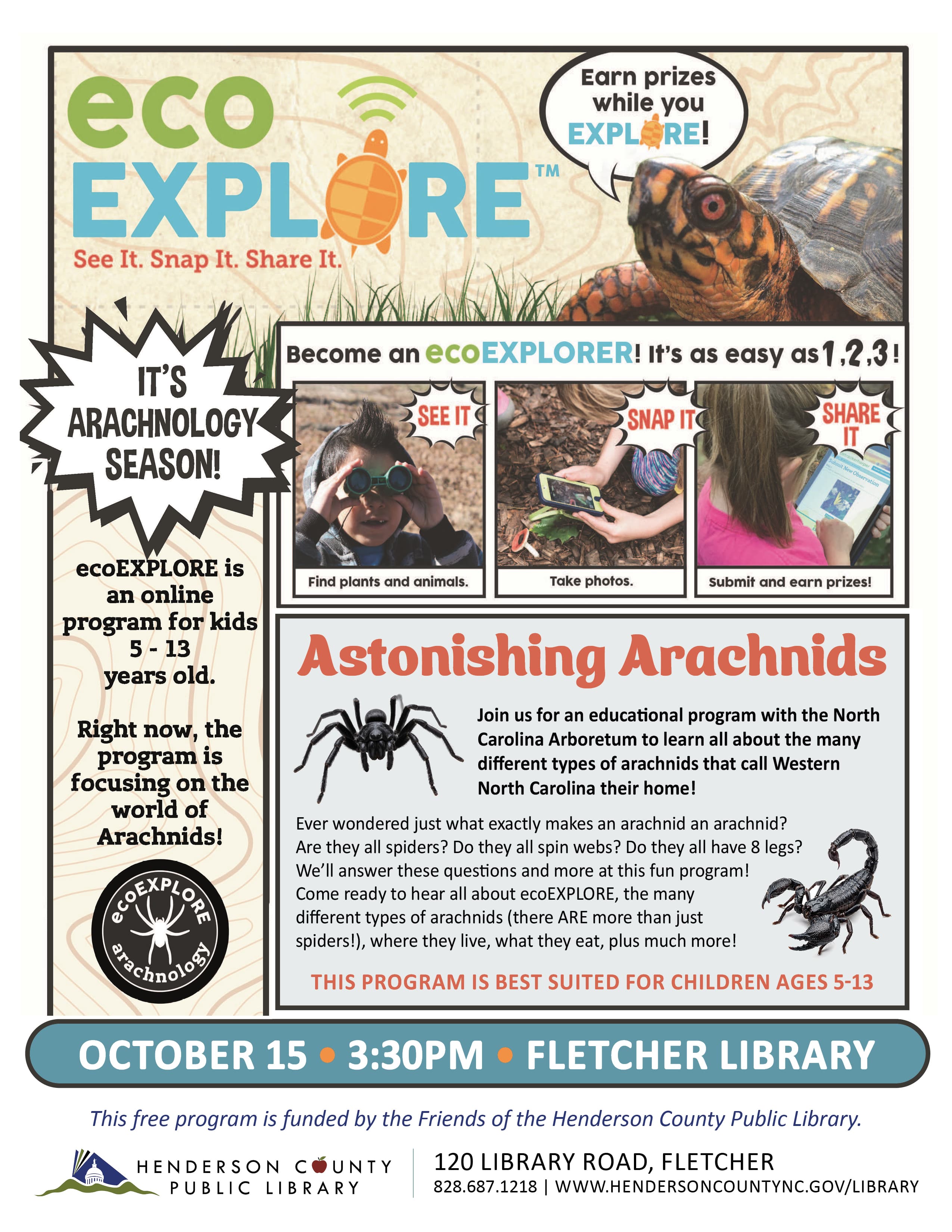
Explore the surprising diversity of Western North Carolina arachnids, from spiders to lesser-known eight-legged neighbors. Learn what defines them, where they live, and whether every arachnid spins a web.
Explore the surprising diversity of Western North Carolina arachnids, from spiders to lesser-known eight-legged neighbors. Learn what defines them, where they live, and whether every arachnid spins a web.
Explore the surprising diversity of Western North Carolina arachnids, from spiders to lesser-known eight-legged neighbors. Learn what defines them, where they live, and whether every arachnid spins a web.
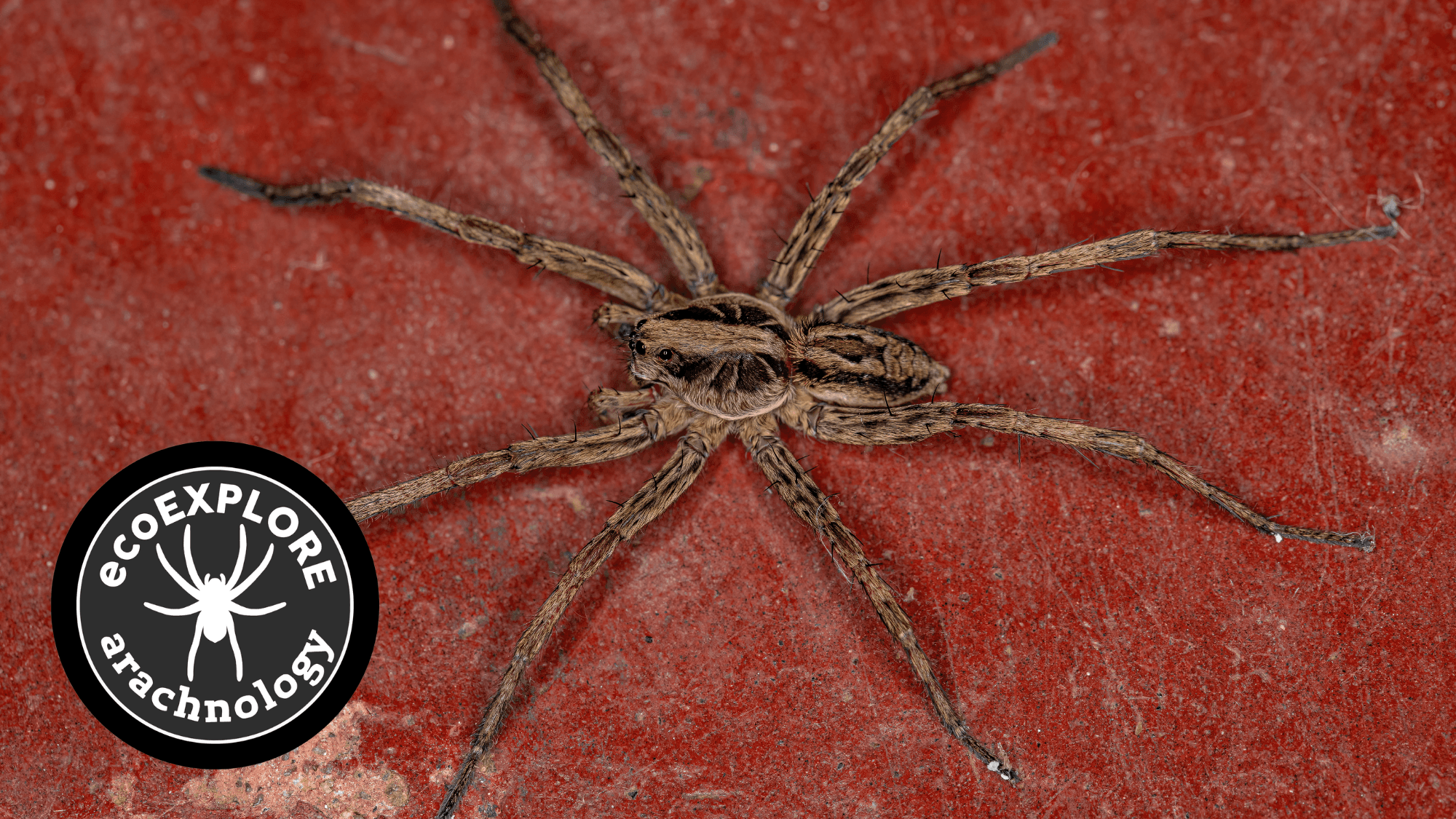
Explore Western North Carolina arachnids beyond spiders, learning how to identify them by their features and discover where they live. A fun, nature-focused program introduces local wildlife and ecoEXPLORE.
Explore Western North Carolina arachnids beyond spiders, learning how to identify them by their features and discover where they live. A fun, nature-focused program introduces local wildlife and ecoEXPLORE.
Explore Western North Carolina arachnids beyond spiders, learning how to identify them by their features and discover where they live. A fun, nature-focused program introduces local wildlife and ecoEXPLORE.

Explore what defines arachnids, from spiders to lesser-known relatives, and learn where these fascinating creatures live across Western North Carolina through an engaging ecoEXPLORE nature education program.
Explore what defines arachnids, from spiders to lesser-known relatives, and learn where these fascinating creatures live across Western North Carolina through an engaging ecoEXPLORE nature education program.
Explore what defines arachnids, from spiders to lesser-known relatives, and learn where these fascinating creatures live across Western North Carolina through an engaging ecoEXPLORE nature education program.
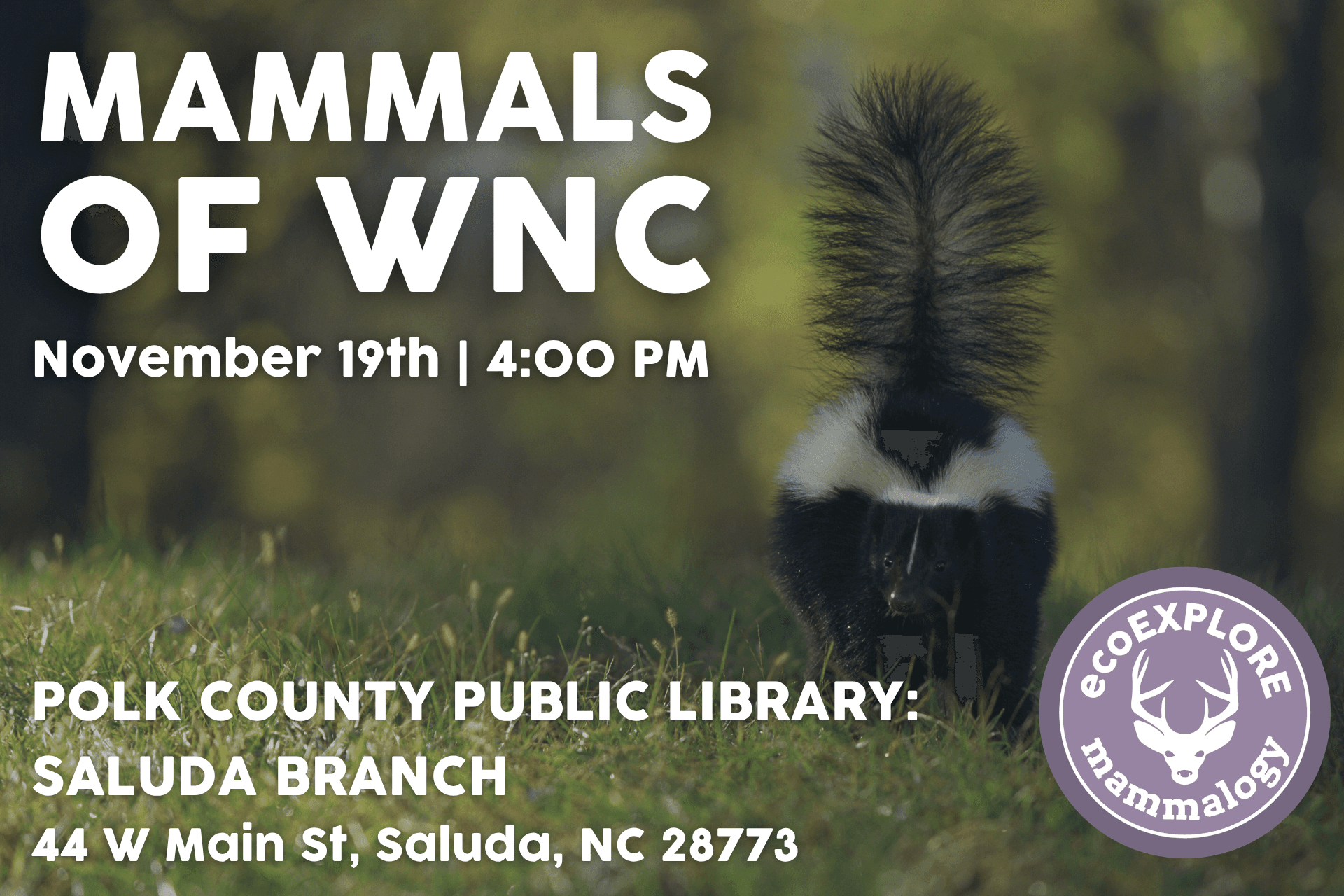
Explore Western North Carolina mammal ecology, from hibernation habits to clues that reveal wildlife visitors. Examine animal skulls and skins while learning about the ecoEXPLORE program.
Explore Western North Carolina mammal ecology, from hibernation habits to clues that reveal wildlife visitors. Examine animal skulls and skins while learning about the ecoEXPLORE program.
Explore Western North Carolina mammal ecology, from hibernation habits to clues that reveal wildlife visitors. Examine animal skulls and skins while learning about the ecoEXPLORE program.
Explore Western North Carolina mammals through questions about hibernation and signs of wildlife visits, with close-up looks at real skulls and skins in a hands-on educational program.
Explore Western North Carolina mammals through questions about hibernation and signs of wildlife visits, with close-up looks at real skulls and skins in a hands-on educational program.
Explore Western North Carolina mammals through questions about hibernation and signs of wildlife visits, with close-up looks at real skulls and skins in a hands-on educational program.
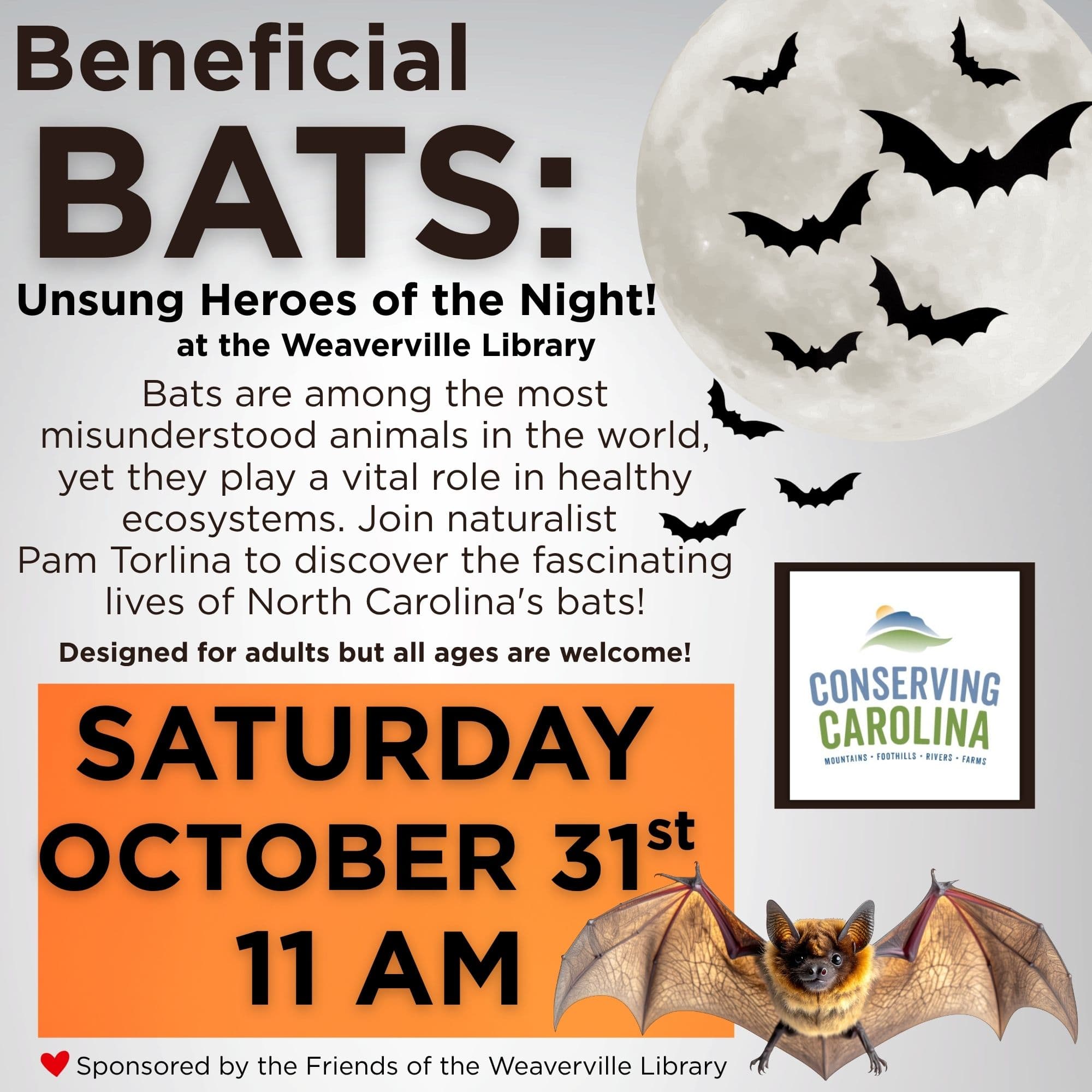
Explore the fascinating lives of North Carolina’s bats, their role in controlling insect populations, and the challenges threatening these misunderstood nighttime neighbors. Learn practical ways to support local bat conservation.
Explore the fascinating lives of North Carolina’s bats, their role in controlling insect populations, and the challenges threatening these misunderstood nighttime neighbors. Learn practical ways to support local bat conservation.
Explore the fascinating lives of North Carolina’s bats, their role in controlling insect populations, and the challenges threatening these misunderstood nighttime neighbors. Learn practical ways to support local bat conservation.
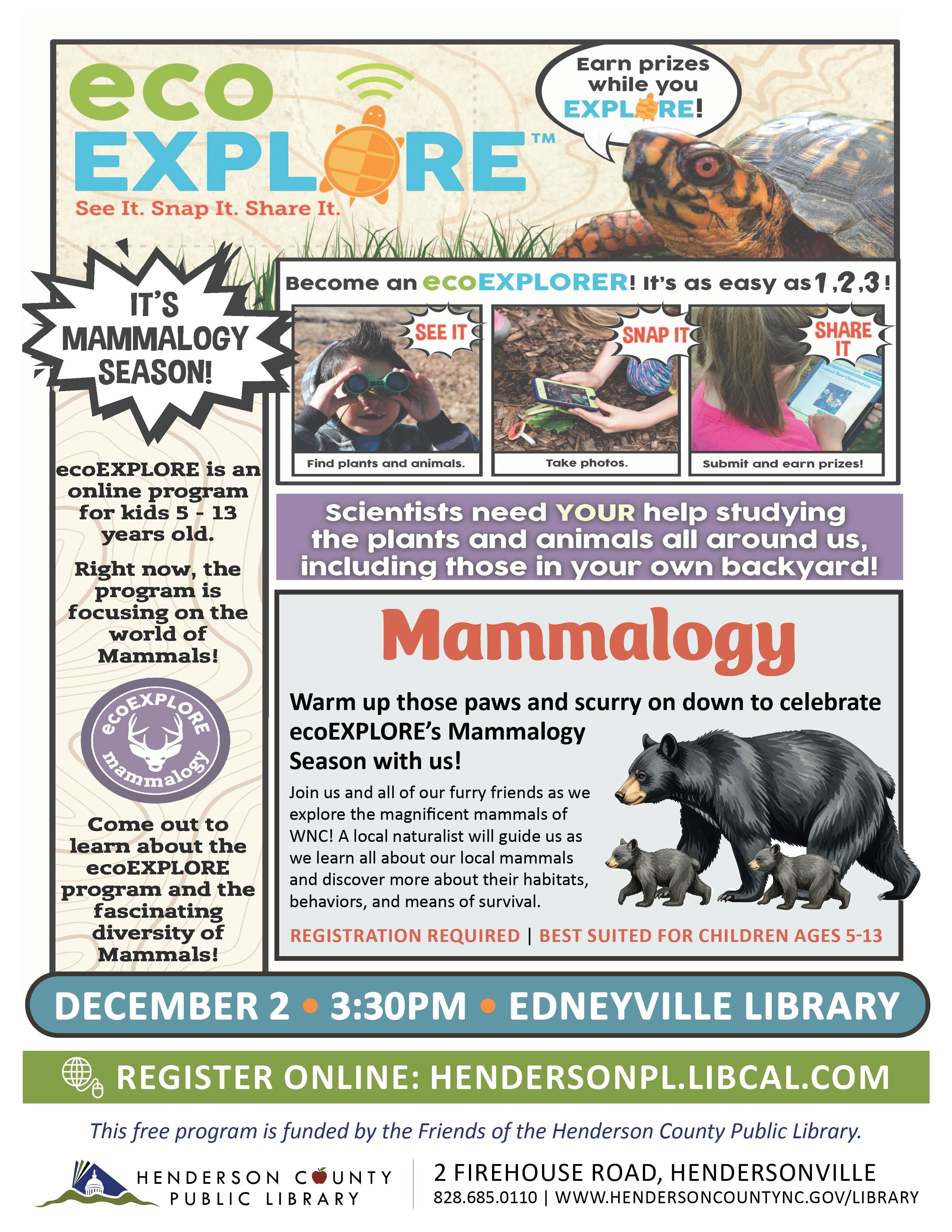
A local naturalist guides children through Western North Carolina’s mammals, exploring habitats, behavior, and survival adaptations. This free, registration-required learning program is designed for ages 5–13.
A local naturalist guides children through Western North Carolina’s mammals, exploring habitats, behavior, and survival adaptations. This free, registration-required learning program is designed for ages 5–13.
A local naturalist guides children through Western North Carolina’s mammals, exploring habitats, behavior, and survival adaptations. This free, registration-required learning program is designed for ages 5–13.
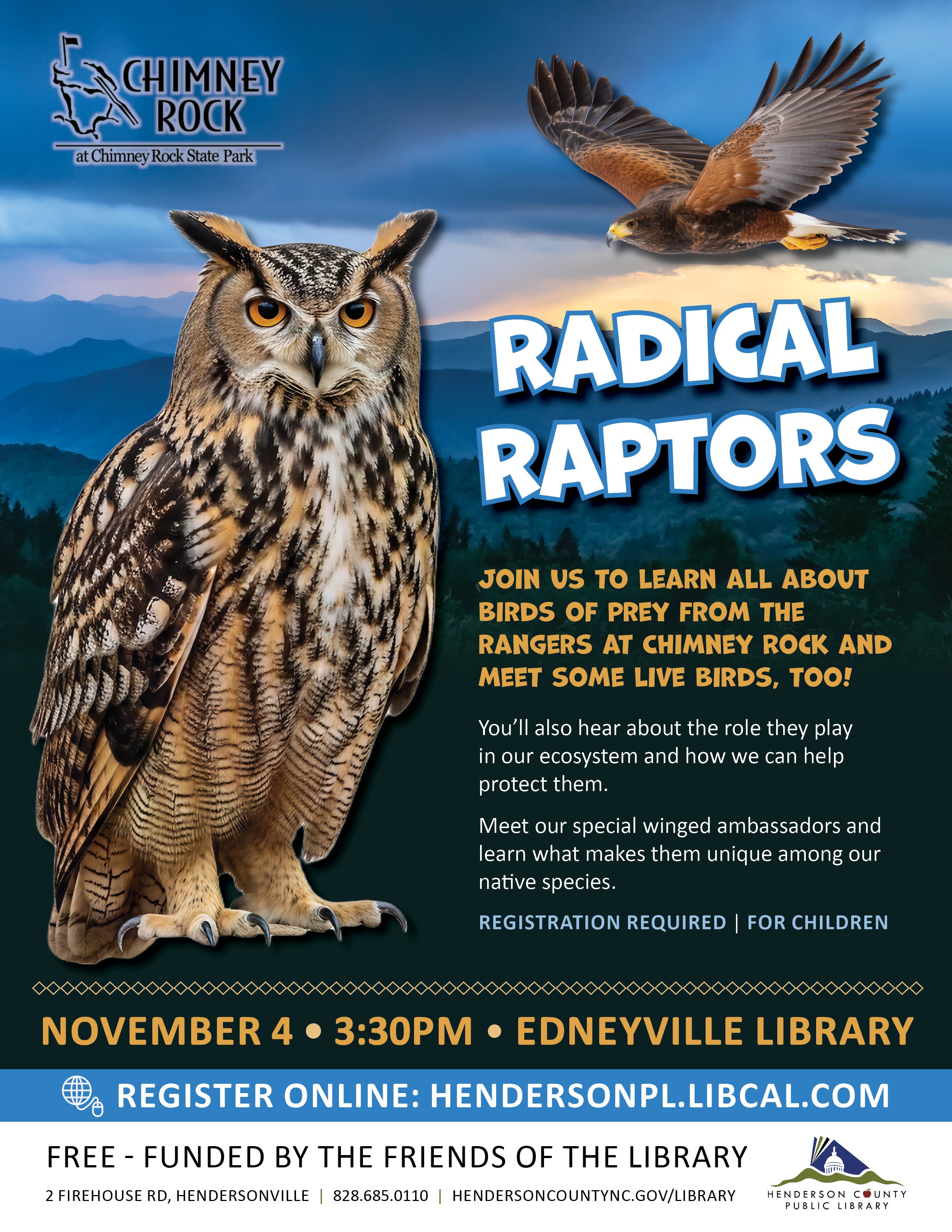
Meet live native birds of prey and discover their distinctive adaptations, ecological roles, and conservation needs. Rangers share ways children and families can help protect these winged ambassadors.
Meet live native birds of prey and discover their distinctive adaptations, ecological roles, and conservation needs. Rangers share ways children and families can help protect these winged ambassadors.
Meet live native birds of prey and discover their distinctive adaptations, ecological roles, and conservation needs. Rangers share ways children and families can help protect these winged ambassadors.
Explore how native plants sustain pollinators, strengthen local ecosystems, and benefit everyday life through an informative slide presentation on ecological gardening and biodiversity in Western North Carolina.
Explore how native plants sustain pollinators, strengthen local ecosystems, and benefit everyday life through an informative slide presentation on ecological gardening and biodiversity in Western North Carolina.
Explore how native plants sustain pollinators, strengthen local ecosystems, and benefit everyday life through an informative slide presentation on ecological gardening and biodiversity in Western North Carolina.
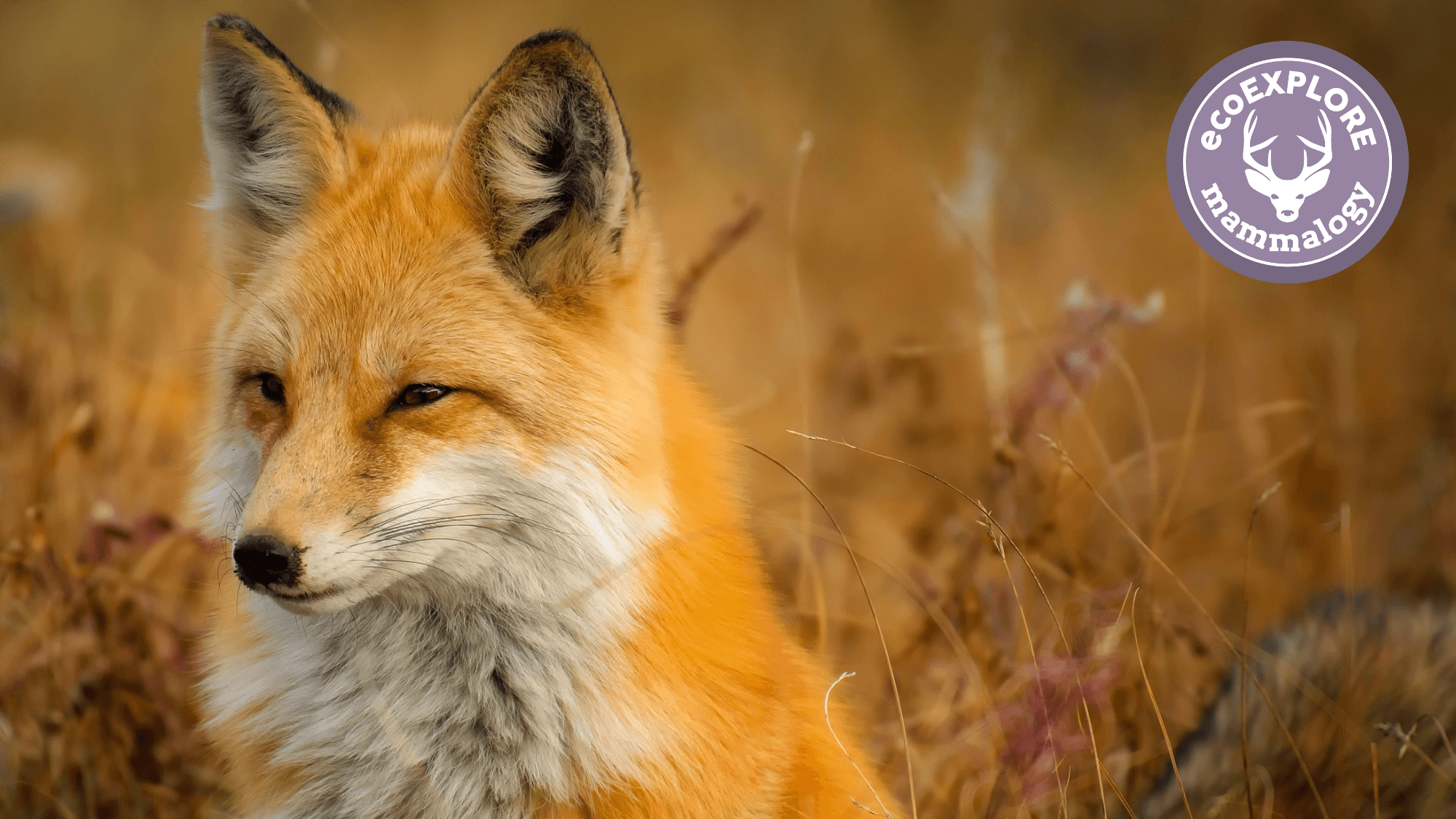
Explore Western North Carolina mammals through questions about hibernation and animal signs, with close-up looks at real skulls and skins. Discover how to identify the wild visitors around us.
Explore Western North Carolina mammals through questions about hibernation and animal signs, with close-up looks at real skulls and skins. Discover how to identify the wild visitors around us.
Explore Western North Carolina mammals through questions about hibernation and animal signs, with close-up looks at real skulls and skins. Discover how to identify the wild visitors around us.
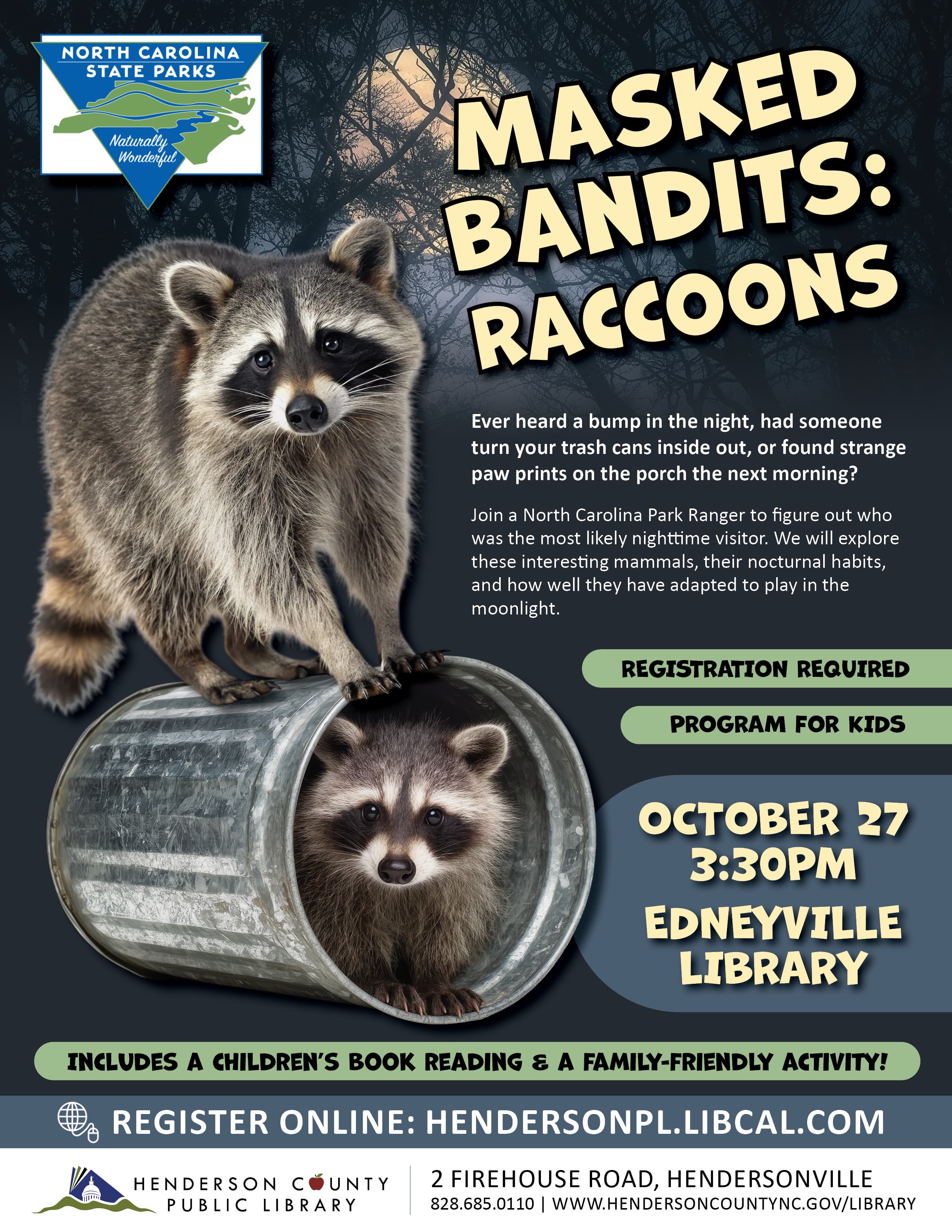
Explore raccoon behavior, nighttime habits, and adaptations with a North Carolina Park Ranger through an engaging nature program. A children’s book reading and hands-on activity welcome families and curious learners of all ages.
Explore raccoon behavior, nighttime habits, and adaptations with a North Carolina Park Ranger through an engaging nature program. A children’s book reading and hands-on activity welcome families and curious learners of all ages.
Explore raccoon behavior, nighttime habits, and adaptations with a North Carolina Park Ranger through an engaging nature program. A children’s book reading and hands-on activity welcome families and curious learners of all ages.
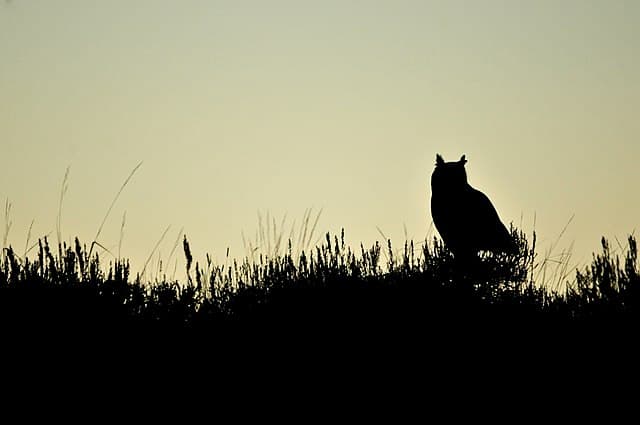
A biologist explains how artificial light disrupts amphibians, birds, mammals, and insects, connecting dark-sky protection with biodiversity conservation and practical ways households can reduce nighttime illumination.
A biologist explains how artificial light disrupts amphibians, birds, mammals, and insects, connecting dark-sky protection with biodiversity conservation and practical ways households can reduce nighttime illumination.
A biologist explains how artificial light disrupts amphibians, birds, mammals, and insects, connecting dark-sky protection with biodiversity conservation and practical ways households can reduce nighttime illumination.
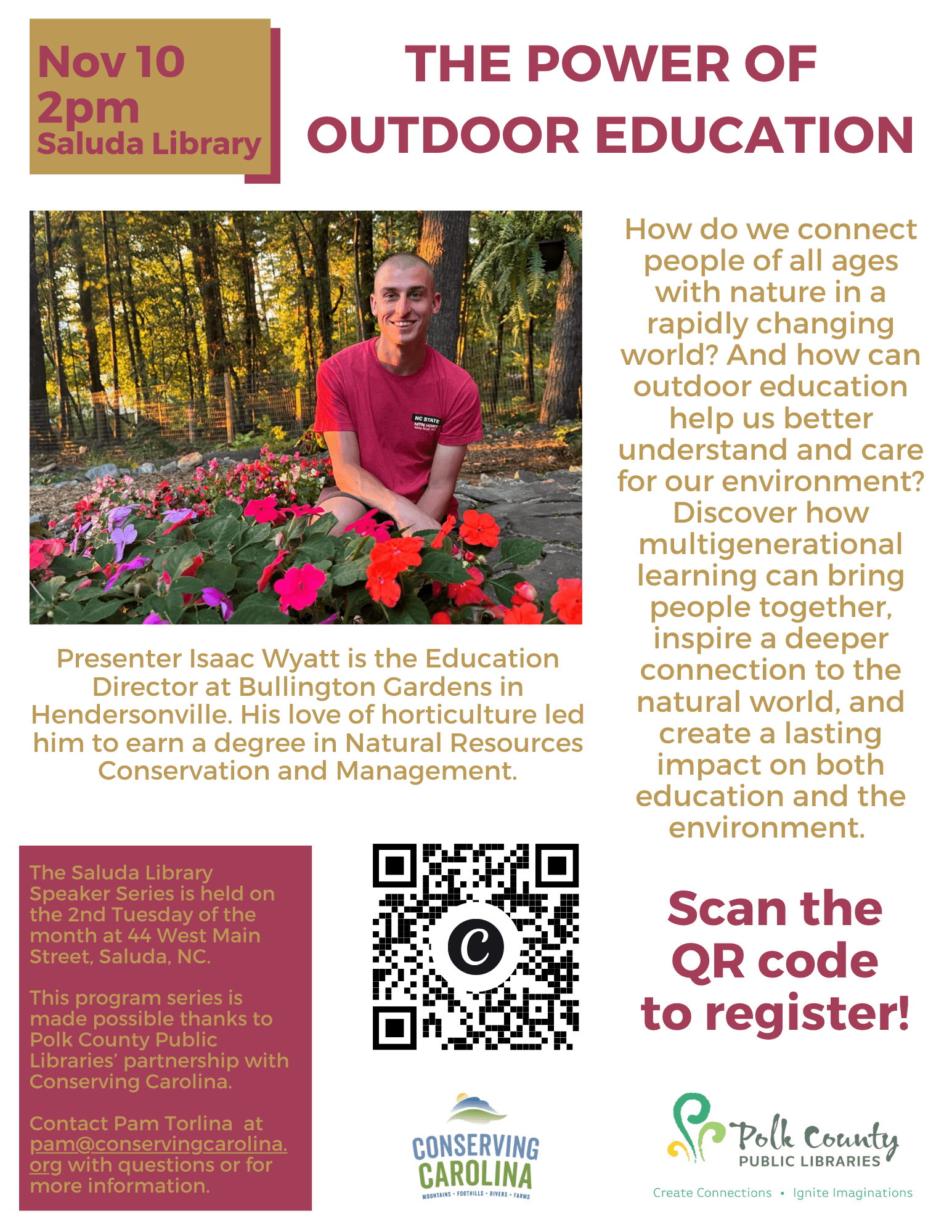
Explore how outdoor education and multigenerational learning deepen people’s connection to nature and inspire environmental stewardship. Horticulture educator Isaac Wyatt shares ways learning outdoors can benefit communities and the environment.
Explore how outdoor education and multigenerational learning deepen people’s connection to nature and inspire environmental stewardship. Horticulture educator Isaac Wyatt shares ways learning outdoors can benefit communities and the environment.
Explore how outdoor education and multigenerational learning deepen people’s connection to nature and inspire environmental stewardship. Horticulture educator Isaac Wyatt shares ways learning outdoors can benefit communities and the environment.
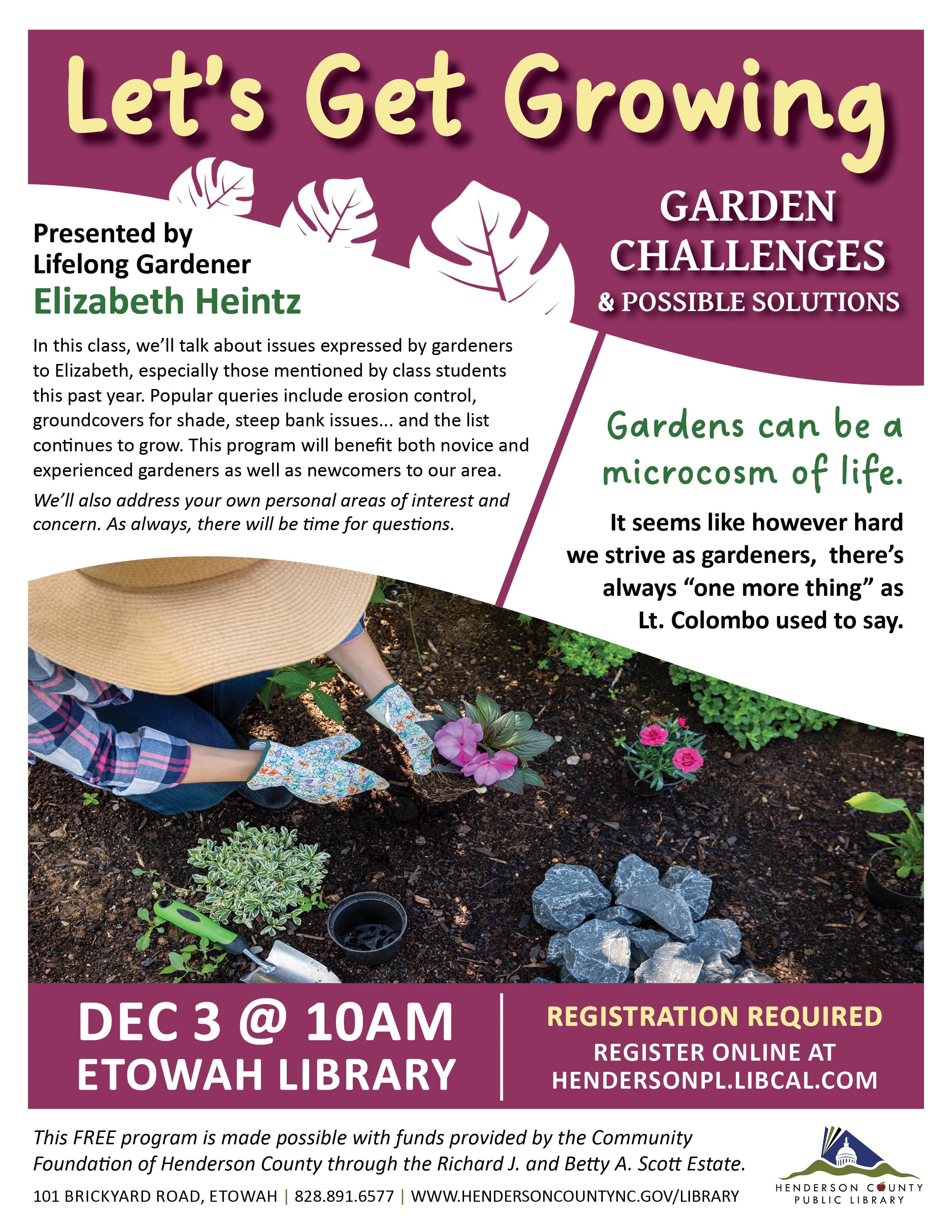
Practical gardening advice tackles erosion control, shade groundcovers, and steep bank challenges through questions raised by local gardeners. Novice and experienced growers can explore solutions suited to Western North Carolina gardens.
Practical gardening advice tackles erosion control, shade groundcovers, and steep bank challenges through questions raised by local gardeners. Novice and experienced growers can explore solutions suited to Western North Carolina gardens.
Practical gardening advice tackles erosion control, shade groundcovers, and steep bank challenges through questions raised by local gardeners. Novice and experienced growers can explore solutions suited to Western North Carolina gardens.

A lunchtime presentation explores the American chestnut’s ecological and cultural importance and efforts to save this once-dominant tree, with an engaging conservation perspective for curious community members.
A lunchtime presentation explores the American chestnut’s ecological and cultural importance and efforts to save this once-dominant tree, with an engaging conservation perspective for curious community members.
A lunchtime presentation explores the American chestnut’s ecological and cultural importance and efforts to save this once-dominant tree, with an engaging conservation perspective for curious community members.

Children build reading confidence during supportive 15-minute read-aloud sessions with a gentle therapy dog, practicing literacy skills in a safe, encouraging environment without criticism or correction.
Children build reading confidence during supportive 15-minute read-aloud sessions with a gentle therapy dog, practicing literacy skills in a safe, encouraging environment without criticism or correction.
Children build reading confidence during supportive 15-minute read-aloud sessions with a gentle therapy dog, practicing literacy skills in a safe, encouraging environment without criticism or correction.
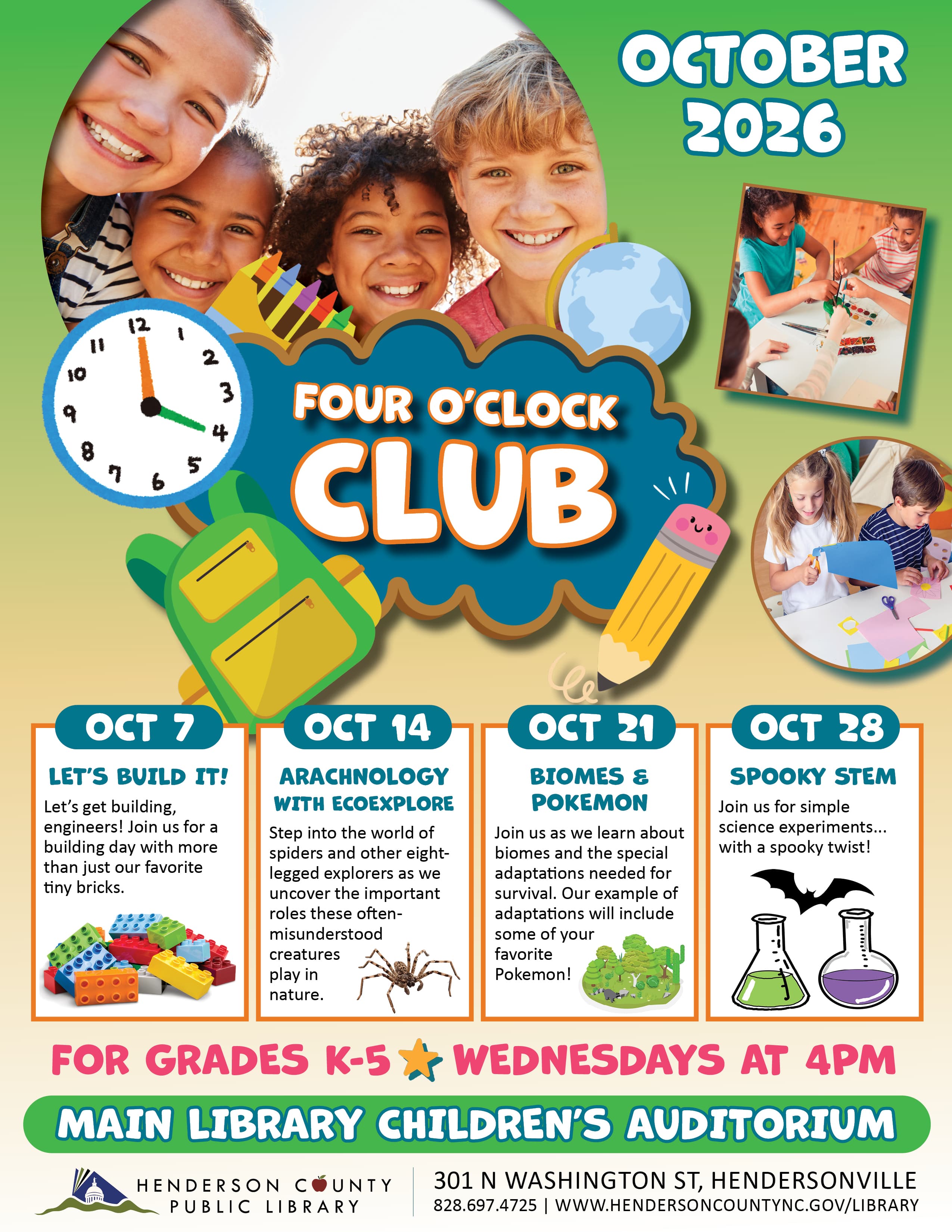
Explore forests, deserts, and other biomes while learning how plants and animals adapt to survive. Familiar Pokémon provide playful examples for elementary students in grades K–5.
Explore forests, deserts, and other biomes while learning how plants and animals adapt to survive. Familiar Pokémon provide playful examples for elementary students in grades K–5.
Explore forests, deserts, and other biomes while learning how plants and animals adapt to survive. Familiar Pokémon provide playful examples for elementary students in grades K–5.
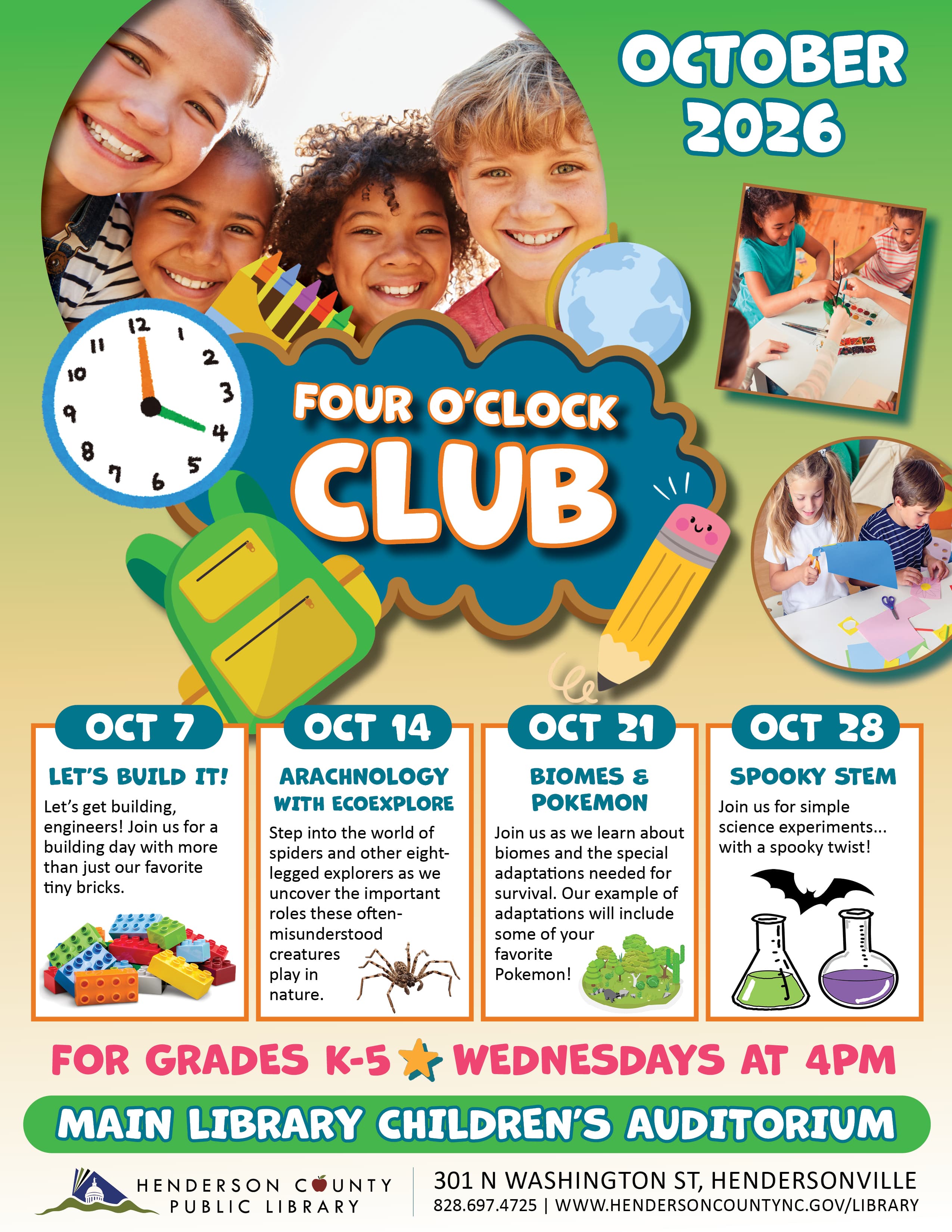
Hands-on science experiments bring a spooky twist to an after-school program for elementary students. Young learners in grades K–5 can explore STEM through simple, seasonal activities.
Hands-on science experiments bring a spooky twist to an after-school program for elementary students. Young learners in grades K–5 can explore STEM through simple, seasonal activities.
Hands-on science experiments bring a spooky twist to an after-school program for elementary students. Young learners in grades K–5 can explore STEM through simple, seasonal activities.