
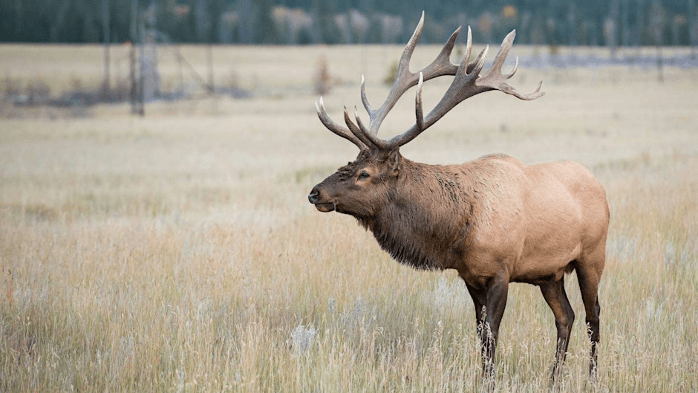
Mammals of the Southern Appalachians
Explore Southern Appalachian mammals through their regional distribution, natural life cycles, and ecological roles, alongside discussions of wildlife controversies and the cultural connections between people and native species.
Similar Events
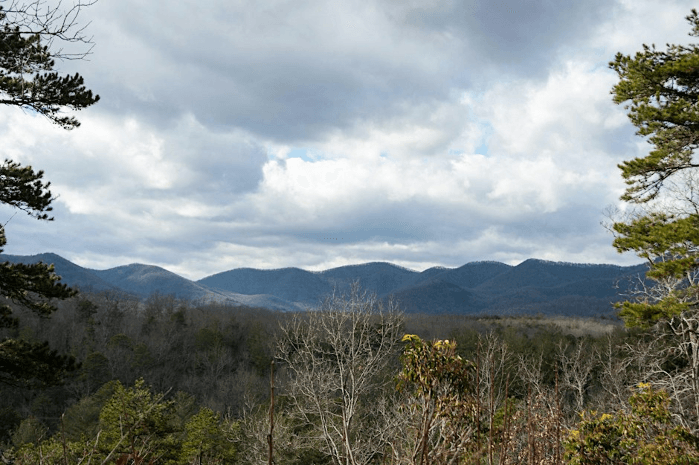
Trace Blue Ridge ecosystems from the Ice Age through geologic history, discovering how shifting climate and landscapes shaped the region’s plants, animals, and present-day biodiversity.
Trace Blue Ridge ecosystems from the Ice Age through geologic history, discovering how shifting climate and landscapes shaped the region’s plants, animals, and present-day biodiversity.
Trace Blue Ridge ecosystems from the Ice Age through geologic history, discovering how shifting climate and landscapes shaped the region’s plants, animals, and present-day biodiversity.
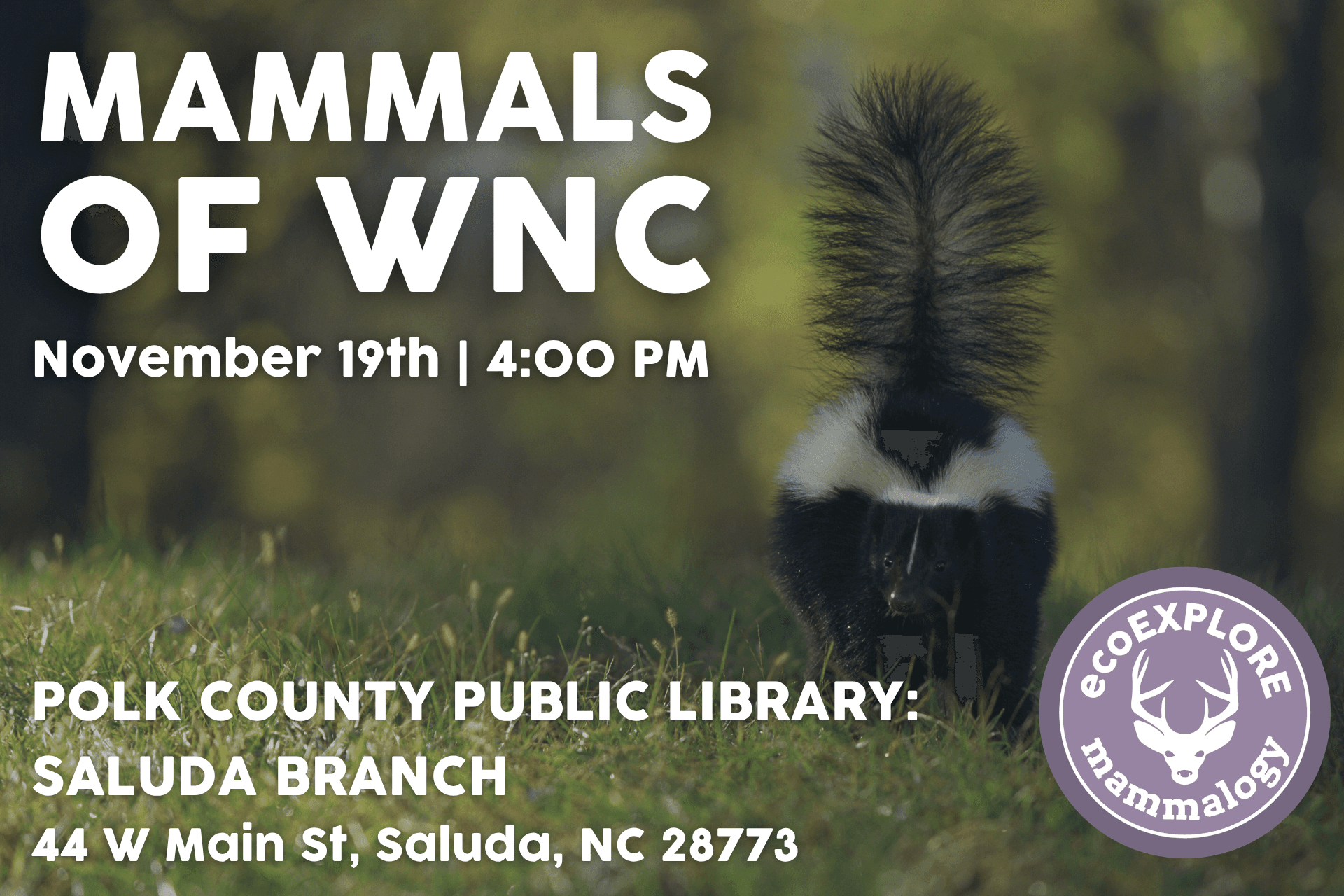
Mammals of WNC
MoreExplore Western North Carolina mammal ecology, from hibernation habits to clues that reveal wildlife visitors. Examine animal skulls and skins while learning about the ecoEXPLORE program.
Explore Western North Carolina mammal ecology, from hibernation habits to clues that reveal wildlife visitors. Examine animal skulls and skins while learning about the ecoEXPLORE program.
Explore Western North Carolina mammal ecology, from hibernation habits to clues that reveal wildlife visitors. Examine animal skulls and skins while learning about the ecoEXPLORE program.
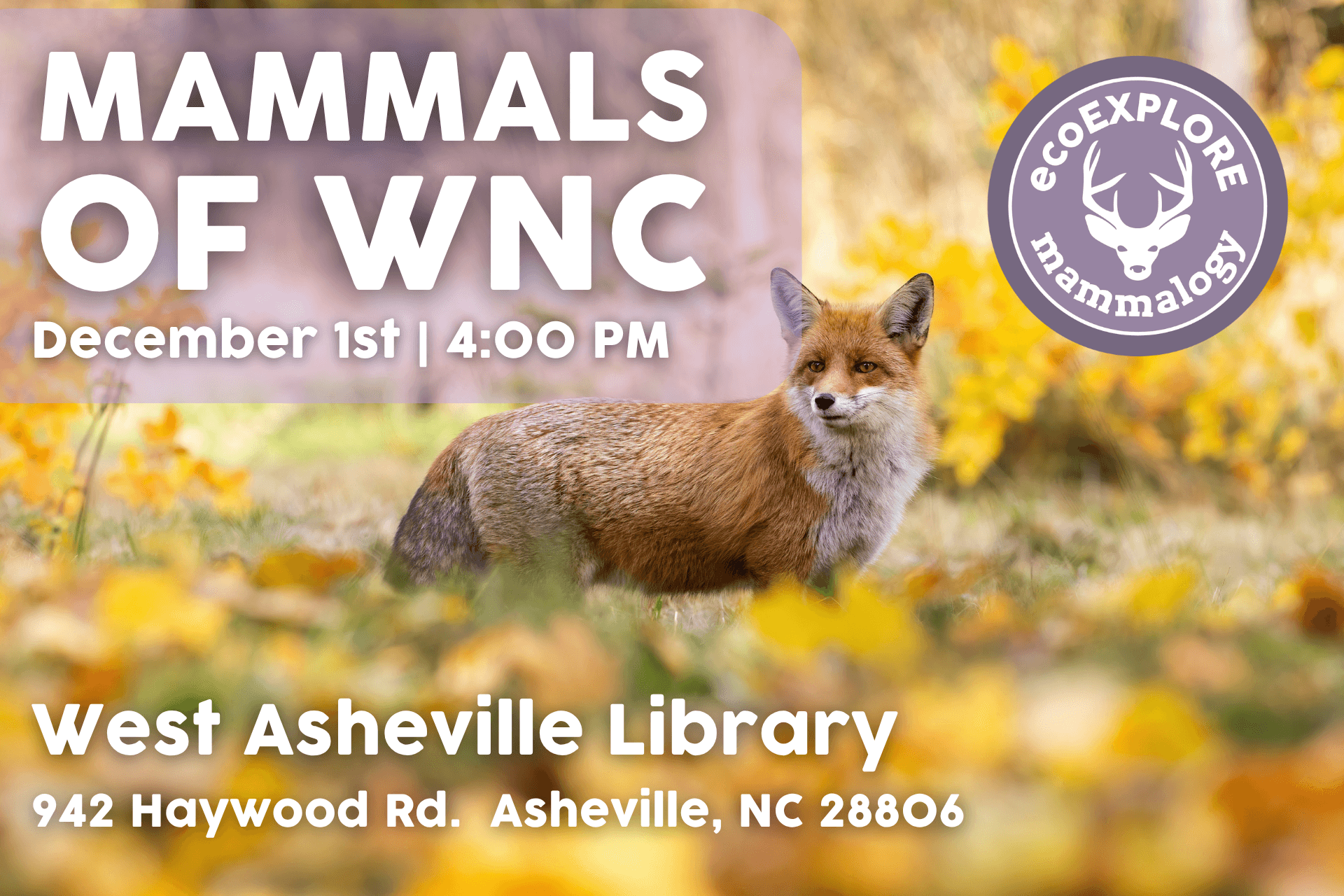
Explore Western North Carolina mammals through questions about hibernation and wildlife tracking, with close-up looks at real skulls and skins and an introduction to the ecoEXPLORE citizen science program.
Explore Western North Carolina mammals through questions about hibernation and wildlife tracking, with close-up looks at real skulls and skins and an introduction to the ecoEXPLORE citizen science program.
Explore Western North Carolina mammals through questions about hibernation and wildlife tracking, with close-up looks at real skulls and skins and an introduction to the ecoEXPLORE citizen science program.
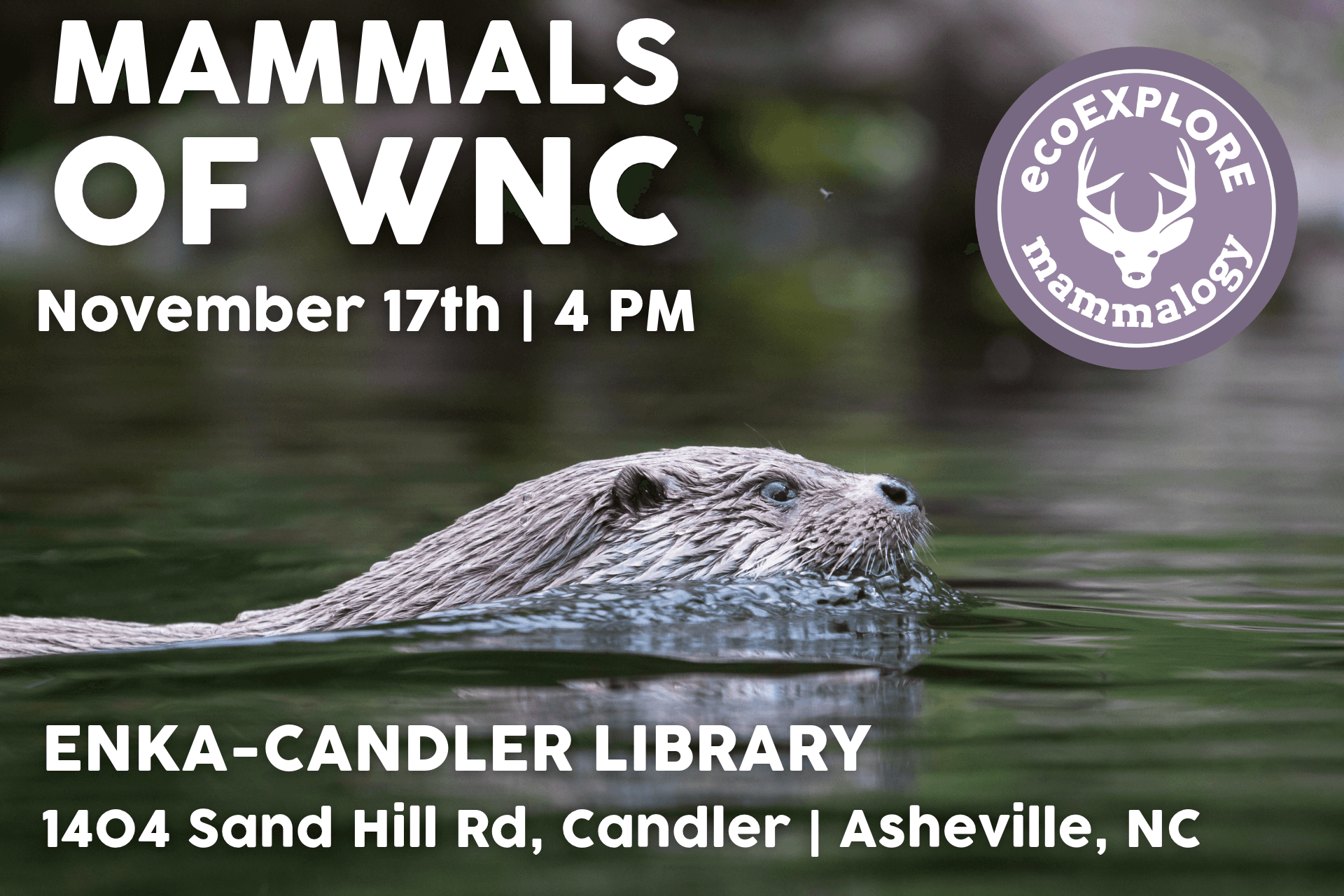
Explore Western North Carolina mammals through questions about hibernation and wildlife signs, with close-up examination of skulls and skins and an introduction to the ecoEXPLORE citizen-science program.
Explore Western North Carolina mammals through questions about hibernation and wildlife signs, with close-up examination of skulls and skins and an introduction to the ecoEXPLORE citizen-science program.
Explore Western North Carolina mammals through questions about hibernation and wildlife signs, with close-up examination of skulls and skins and an introduction to the ecoEXPLORE citizen-science program.

Explore Western North Carolina mammals through questions about hibernation and signs of wildlife visits, with close-up looks at real skulls and skins in a hands-on educational program.
Explore Western North Carolina mammals through questions about hibernation and signs of wildlife visits, with close-up looks at real skulls and skins in a hands-on educational program.
Explore Western North Carolina mammals through questions about hibernation and signs of wildlife visits, with close-up looks at real skulls and skins in a hands-on educational program.
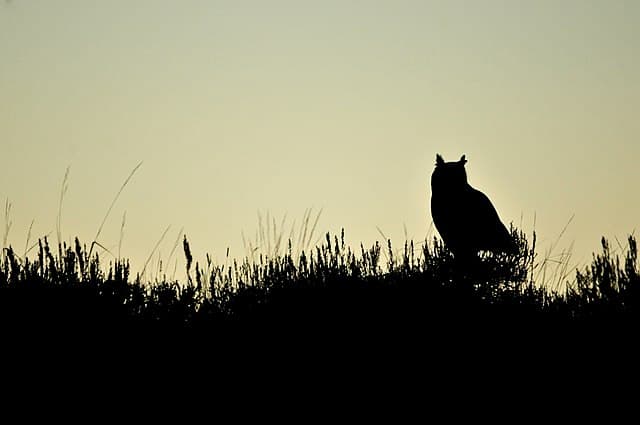
A biologist explains how artificial light disrupts amphibians, birds, mammals, and insects, connecting dark-sky protection with biodiversity conservation and practical ways households can reduce nighttime illumination.
A biologist explains how artificial light disrupts amphibians, birds, mammals, and insects, connecting dark-sky protection with biodiversity conservation and practical ways households can reduce nighttime illumination.
A biologist explains how artificial light disrupts amphibians, birds, mammals, and insects, connecting dark-sky protection with biodiversity conservation and practical ways households can reduce nighttime illumination.
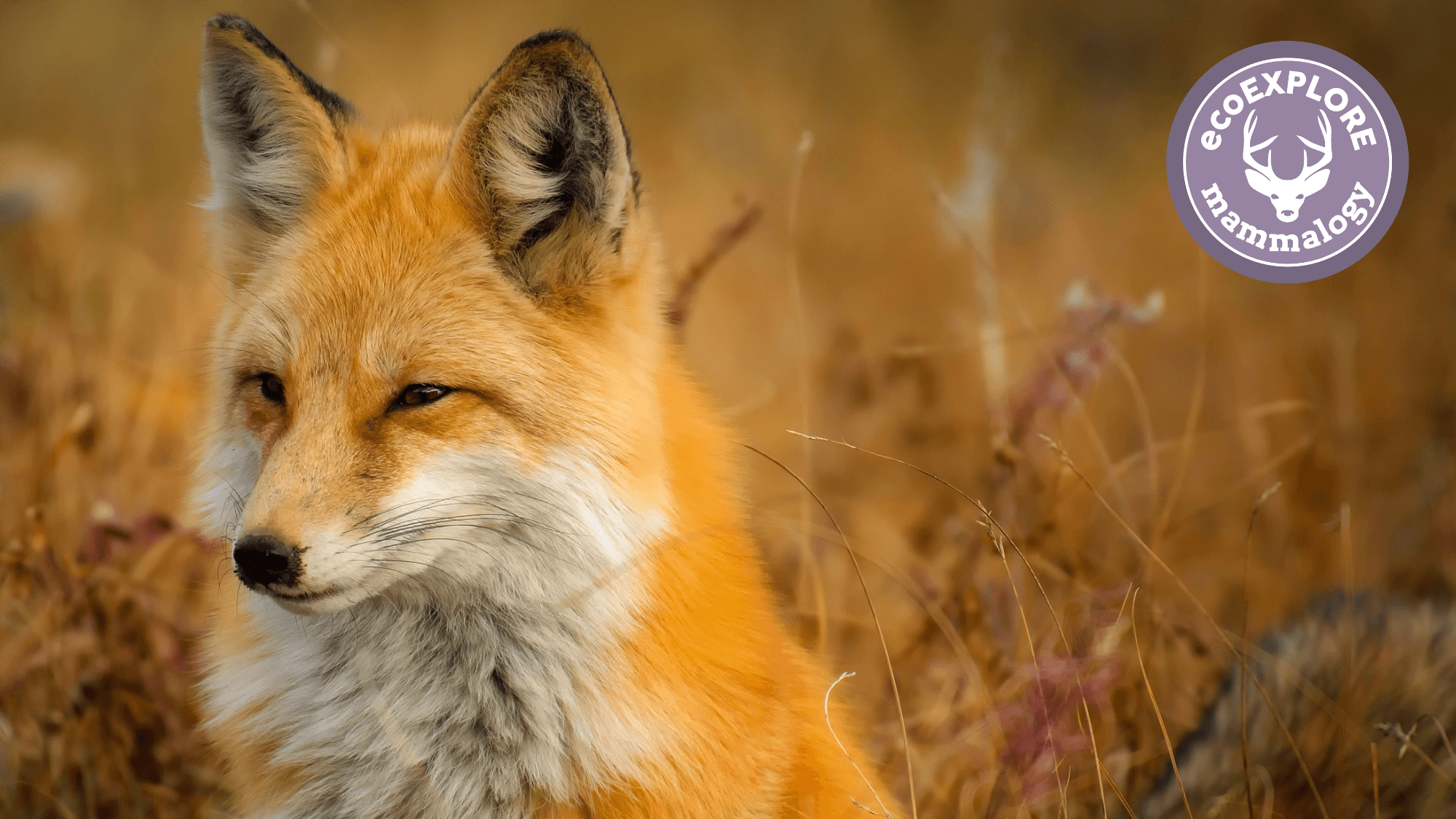
Explore Western North Carolina mammals through questions about hibernation and animal signs, with close-up looks at real skulls and skins. Discover how to identify the wild visitors around us.
Explore Western North Carolina mammals through questions about hibernation and animal signs, with close-up looks at real skulls and skins. Discover how to identify the wild visitors around us.
Explore Western North Carolina mammals through questions about hibernation and animal signs, with close-up looks at real skulls and skins. Discover how to identify the wild visitors around us.
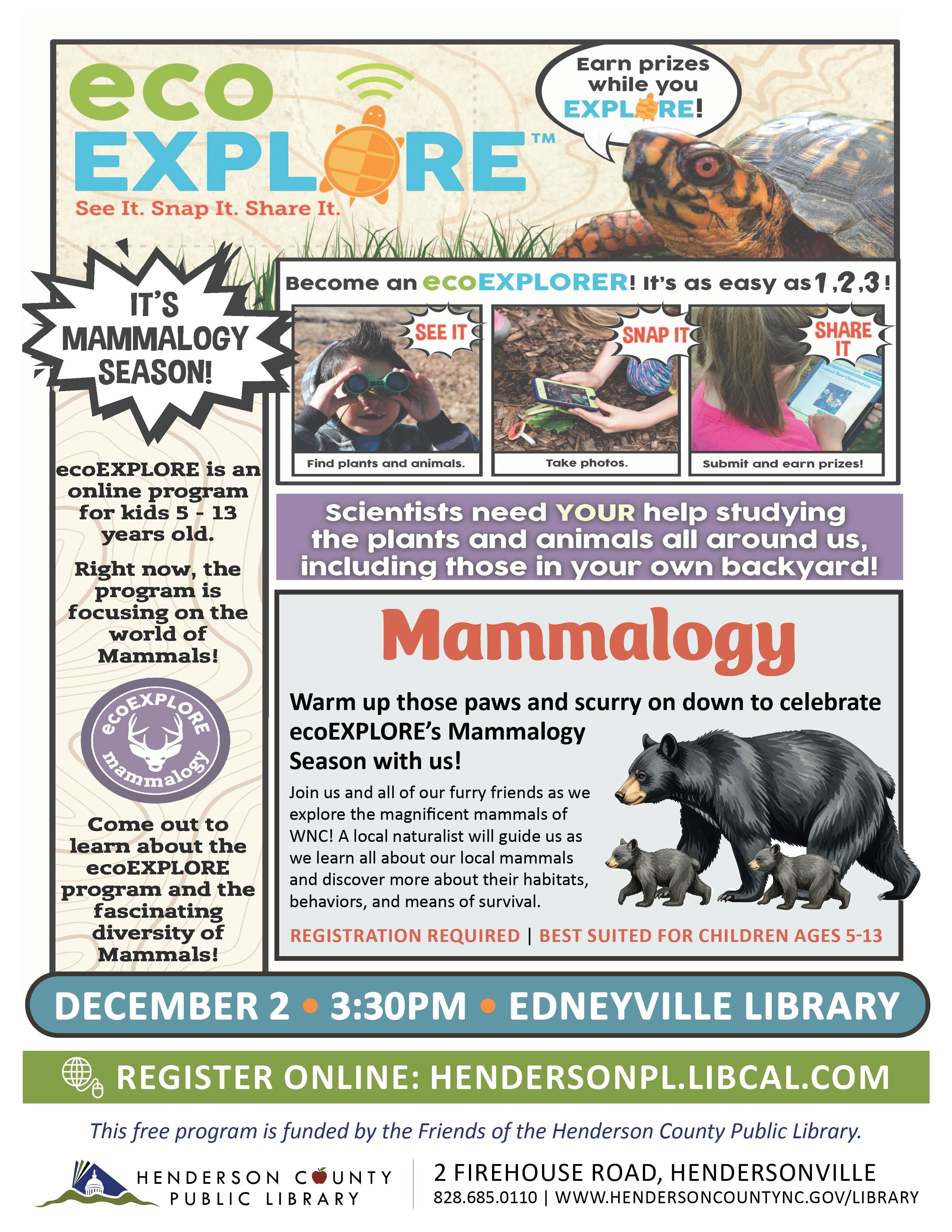
A local naturalist guides children through Western North Carolina’s mammals, exploring habitats, behavior, and survival adaptations. This free, registration-required learning program is designed for ages 5–13.
A local naturalist guides children through Western North Carolina’s mammals, exploring habitats, behavior, and survival adaptations. This free, registration-required learning program is designed for ages 5–13.
A local naturalist guides children through Western North Carolina’s mammals, exploring habitats, behavior, and survival adaptations. This free, registration-required learning program is designed for ages 5–13.
Explore Western North Carolina mammals through ecoEXPLORE, examining skulls and skins while learning what defines a mammal and discovering local wildlife diversity. Designed for K–8 students; registration is required.
Explore Western North Carolina mammals through ecoEXPLORE, examining skulls and skins while learning what defines a mammal and discovering local wildlife diversity. Designed for K–8 students; registration is required.
Explore Western North Carolina mammals through ecoEXPLORE, examining skulls and skins while learning what defines a mammal and discovering local wildlife diversity. Designed for K–8 students; registration is required.
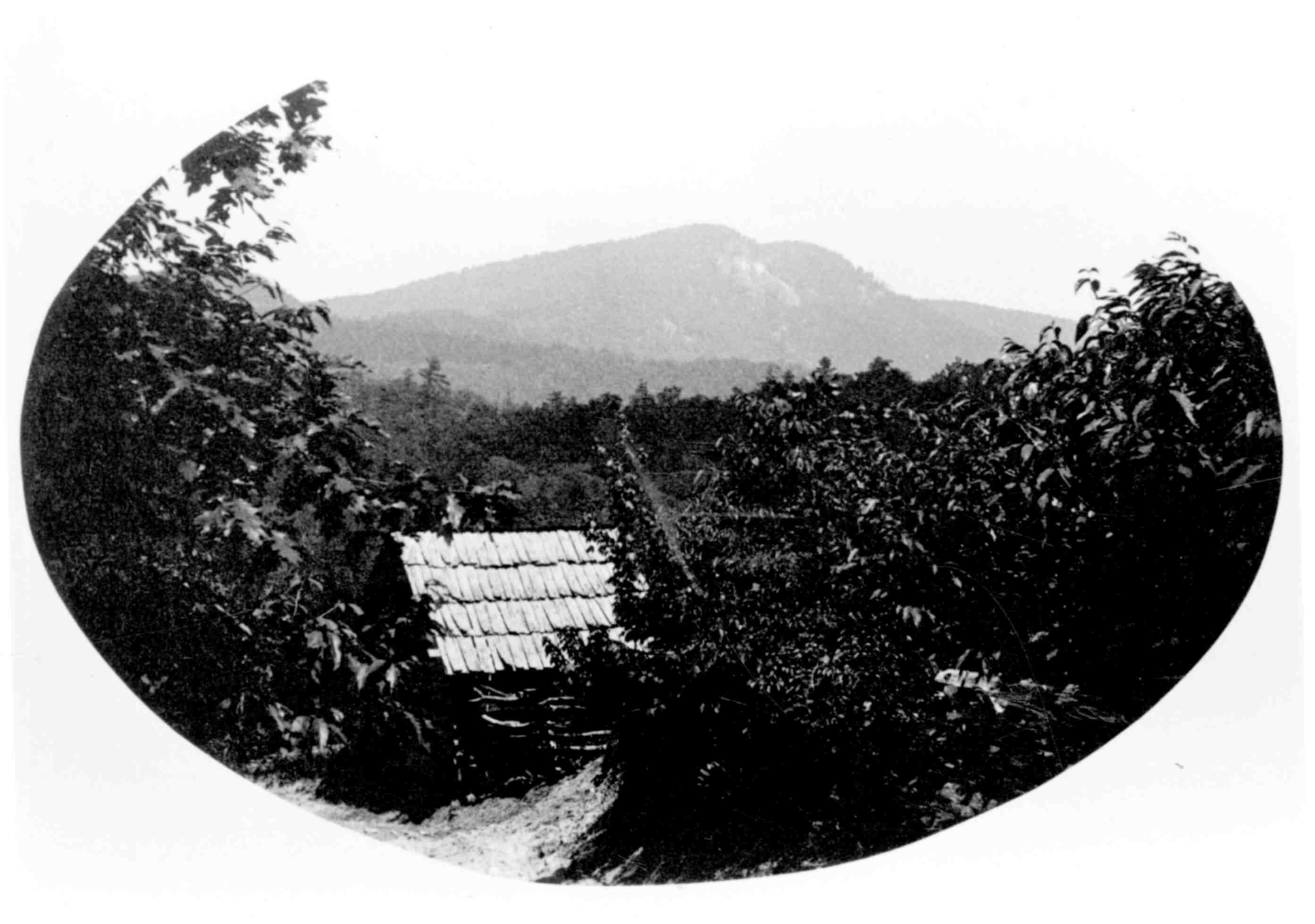
Expert-led presentations explore southern Appalachian history, ecology, outdoor recreation, and cultural life, connecting regional landscapes and communities through accessible, one-hour talks for adult learners. The monthly series brings local expertise to topics spanning the region.
Expert-led presentations explore southern Appalachian history, ecology, outdoor recreation, and cultural life, connecting regional landscapes and communities through accessible, one-hour talks for adult learners. The monthly series brings local expertise to topics spanning the region.
Expert-led presentations explore southern Appalachian history, ecology, outdoor recreation, and cultural life, connecting regional landscapes and communities through accessible, one-hour talks for adult learners. The monthly series brings local expertise to topics spanning the region.
Explore Arboretum trails with staff naturalists, observing flora, fauna, and intriguing natural phenomena. This guided outdoor learning walk invites curious participants to notice ecological details and ask questions.
Explore Arboretum trails with staff naturalists, observing flora, fauna, and intriguing natural phenomena. This guided outdoor learning walk invites curious participants to notice ecological details and ask questions.
Explore Arboretum trails with staff naturalists, observing flora, fauna, and intriguing natural phenomena. This guided outdoor learning walk invites curious participants to notice ecological details and ask questions.
Plant Ecology
MoreExplore how plants interact with one another and with fungi, insects, and other organisms, building a deeper understanding of ecological relationships and the living systems around us.
Explore how plants interact with one another and with fungi, insects, and other organisms, building a deeper understanding of ecological relationships and the living systems around us.
Explore how plants interact with one another and with fungi, insects, and other organisms, building a deeper understanding of ecological relationships and the living systems around us.
Explore zine history and observation as a creative practice, then assemble a handmade nature zine with varied materials. This tactile workshop blends field-inspired noticing, independent publishing, and visual storytelling.
Explore zine history and observation as a creative practice, then assemble a handmade nature zine with varied materials. This tactile workshop blends field-inspired noticing, independent publishing, and visual storytelling.
Explore zine history and observation as a creative practice, then assemble a handmade nature zine with varied materials. This tactile workshop blends field-inspired noticing, independent publishing, and visual storytelling.
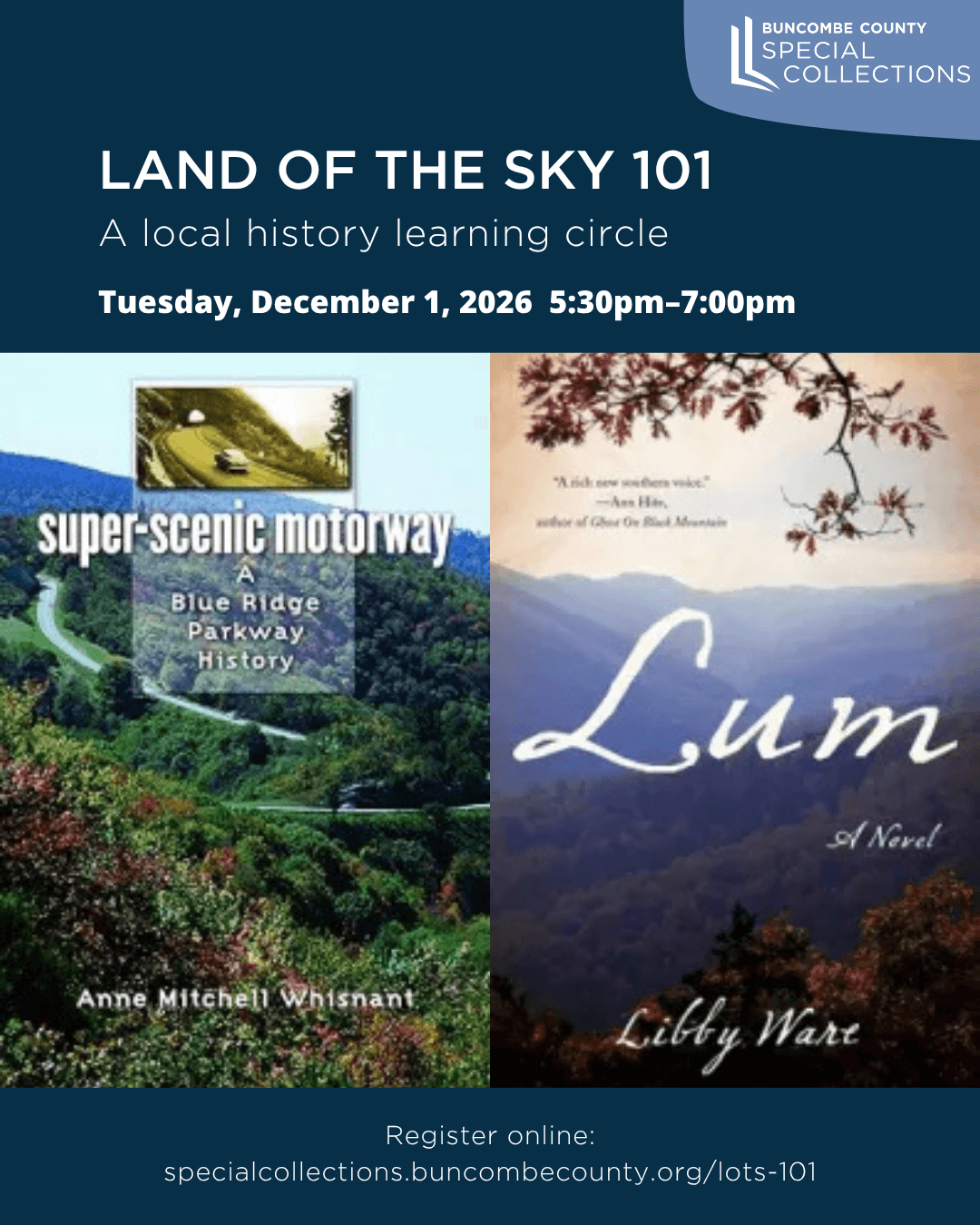
Explore Asheville, Buncombe County, and Western North Carolina history through readings and guided discussions inspired by themes from a local exhibit. The four-part series brings curious community members together for regional learning.
Explore Asheville, Buncombe County, and Western North Carolina history through readings and guided discussions inspired by themes from a local exhibit. The four-part series brings curious community members together for regional learning.
Explore Asheville, Buncombe County, and Western North Carolina history through readings and guided discussions inspired by themes from a local exhibit. The four-part series brings curious community members together for regional learning.
A relaxed beginner birdwatching walk explores garden paths and wooded trails in search of Asheville’s most colorful resident birds. Learn to observe local wildlife while enjoying the Arboretum’s landscapes.
A relaxed beginner birdwatching walk explores garden paths and wooded trails in search of Asheville’s most colorful resident birds. Learn to observe local wildlife while enjoying the Arboretum’s landscapes.
A relaxed beginner birdwatching walk explores garden paths and wooded trails in search of Asheville’s most colorful resident birds. Learn to observe local wildlife while enjoying the Arboretum’s landscapes.
Hands-on workshop on creating plant vouchers—pressed botanical specimens paired with clear labels and documentation. Learn practical herbarium-style preparation techniques while making artistic, functional records for study and collection.
Hands-on workshop on creating plant vouchers—pressed botanical specimens paired with clear labels and documentation. Learn practical herbarium-style preparation techniques while making artistic, functional records for study and collection.
Hands-on workshop on creating plant vouchers—pressed botanical specimens paired with clear labels and documentation. Learn practical herbarium-style preparation techniques while making artistic, functional records for study and collection.
Educators build practical skills for designing environmental education programs grounded in North Carolina Essential Standards. The workshop supports curriculum planning and standards-aligned instruction for nature and science learning.
Educators build practical skills for designing environmental education programs grounded in North Carolina Essential Standards. The workshop supports curriculum planning and standards-aligned instruction for nature and science learning.
Educators build practical skills for designing environmental education programs grounded in North Carolina Essential Standards. The workshop supports curriculum planning and standards-aligned instruction for nature and science learning.
Explore soil composition, organic matter, soil sampling, and test interpretation through practical guidance for improving growing conditions. Learn how healthier soil supports stronger crops and productive gardens.
Explore soil composition, organic matter, soil sampling, and test interpretation through practical guidance for improving growing conditions. Learn how healthier soil supports stronger crops and productive gardens.
Explore soil composition, organic matter, soil sampling, and test interpretation through practical guidance for improving growing conditions. Learn how healthier soil supports stronger crops and productive gardens.
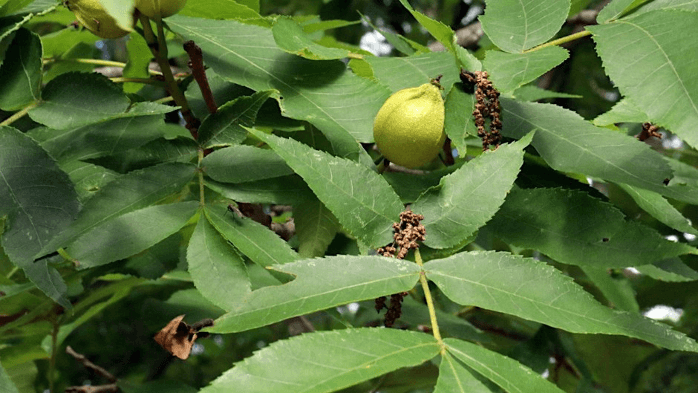
Beginning Botany
MoreExplore how plants meet everyday environmental challenges through adaptations in leaves, stems, and roots. A beginner-friendly botany lesson introduces plant structures and the strategies behind their survival.
Explore how plants meet everyday environmental challenges through adaptations in leaves, stems, and roots. A beginner-friendly botany lesson introduces plant structures and the strategies behind their survival.
Explore how plants meet everyday environmental challenges through adaptations in leaves, stems, and roots. A beginner-friendly botany lesson introduces plant structures and the strategies behind their survival.

Quiet, guided shinrin-yoku through Blue Ridge spruce and hardwood trails at The North Carolina Arboretum, using slow walking, breathwork, and sensory prompts to reduce stress and deepen nature connection.
Quiet, guided shinrin-yoku through Blue Ridge spruce and hardwood trails at The North Carolina Arboretum, using slow walking, breathwork, and sensory prompts to reduce stress and deepen nature connection.
Quiet, guided shinrin-yoku through Blue Ridge spruce and hardwood trails at The North Carolina Arboretum, using slow walking, breathwork, and sensory prompts to reduce stress and deepen nature connection.