

Mammalogy - NC Arboretum
Explore Western North Carolina mammals through an educational program on hibernation, wildlife signs, and what defines a mammal. Examine animal skulls and skins while learning about the ecoEXPLORE program.
Similar Events
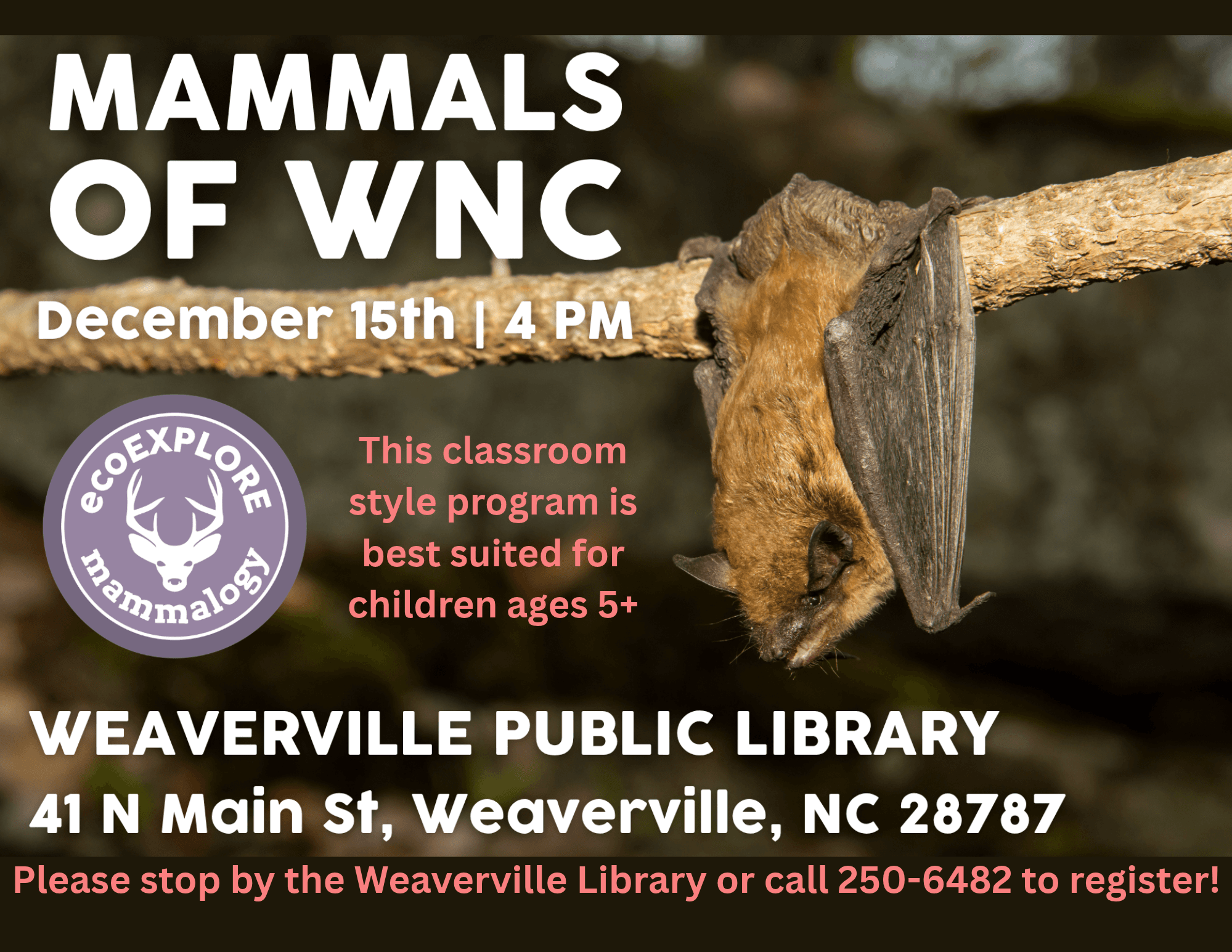
Explore Western North Carolina mammal ecology, hibernation, and signs of wildlife activity through an educational program with hands-on skull and pelt artifacts and an introduction to ecoEXPLORE.
Explore Western North Carolina mammal ecology, hibernation, and signs of wildlife activity through an educational program with hands-on skull and pelt artifacts and an introduction to ecoEXPLORE.
Explore Western North Carolina mammal ecology, hibernation, and signs of wildlife activity through an educational program with hands-on skull and pelt artifacts and an introduction to ecoEXPLORE.
Explore Western North Carolina mammals through questions about hibernation and signs of wildlife visits, with close-up looks at real skulls and skins in a hands-on educational program.
Explore Western North Carolina mammals through questions about hibernation and signs of wildlife visits, with close-up looks at real skulls and skins in a hands-on educational program.
Explore Western North Carolina mammals through questions about hibernation and signs of wildlife visits, with close-up looks at real skulls and skins in a hands-on educational program.
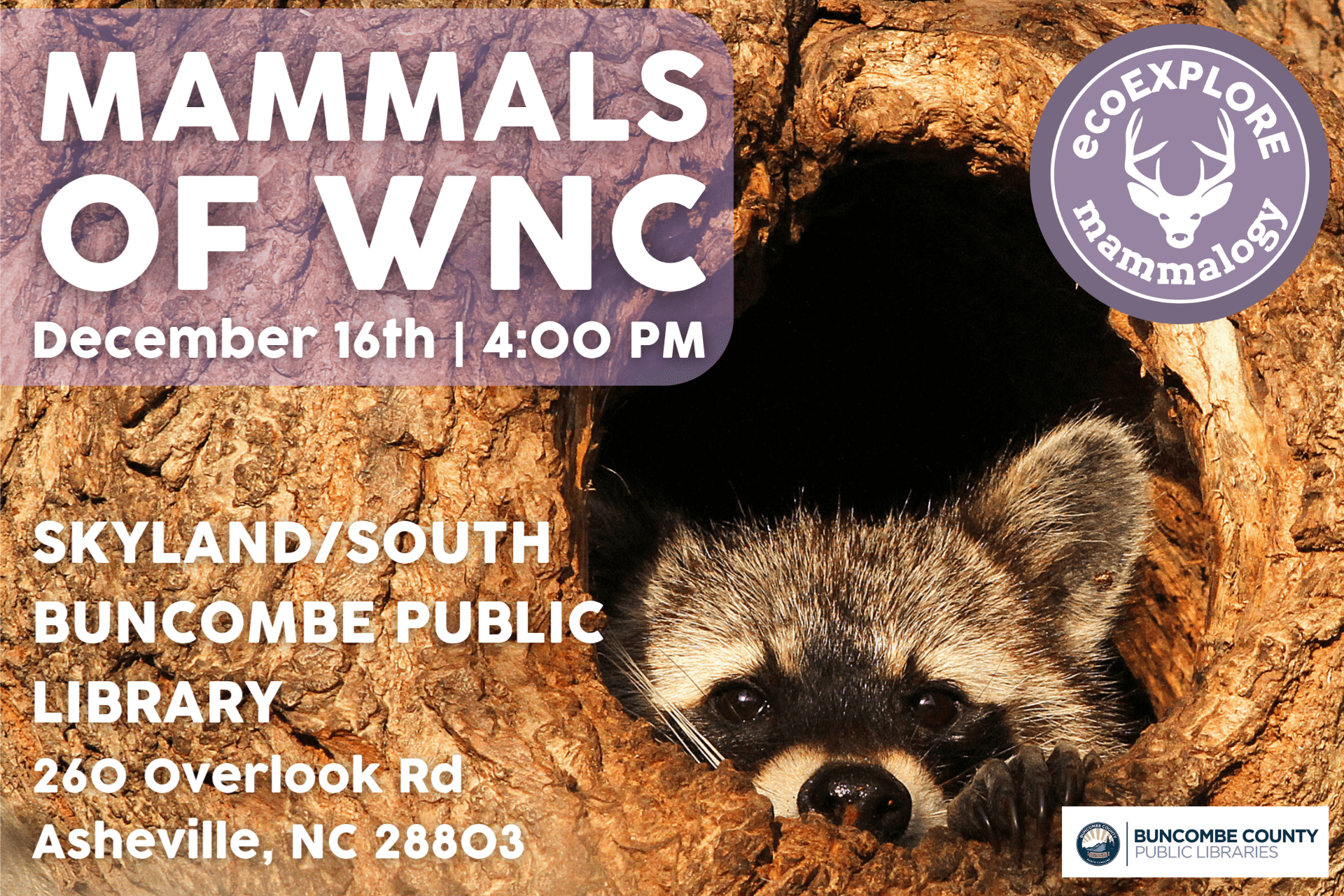
Explore Western North Carolina mammalogy through questions about hibernation and signs of wildlife visits, with close-up examination of mammal skulls and skins and an introduction to ecoEXPLORE.
Explore Western North Carolina mammalogy through questions about hibernation and signs of wildlife visits, with close-up examination of mammal skulls and skins and an introduction to ecoEXPLORE.
Explore Western North Carolina mammalogy through questions about hibernation and signs of wildlife visits, with close-up examination of mammal skulls and skins and an introduction to ecoEXPLORE.
Explore Western North Carolina mammals through questions about hibernation and animal signs, with close-up looks at real skulls and skins. Discover how to identify the wild visitors around us.
Explore Western North Carolina mammals through questions about hibernation and animal signs, with close-up looks at real skulls and skins. Discover how to identify the wild visitors around us.
Explore Western North Carolina mammals through questions about hibernation and animal signs, with close-up looks at real skulls and skins. Discover how to identify the wild visitors around us.
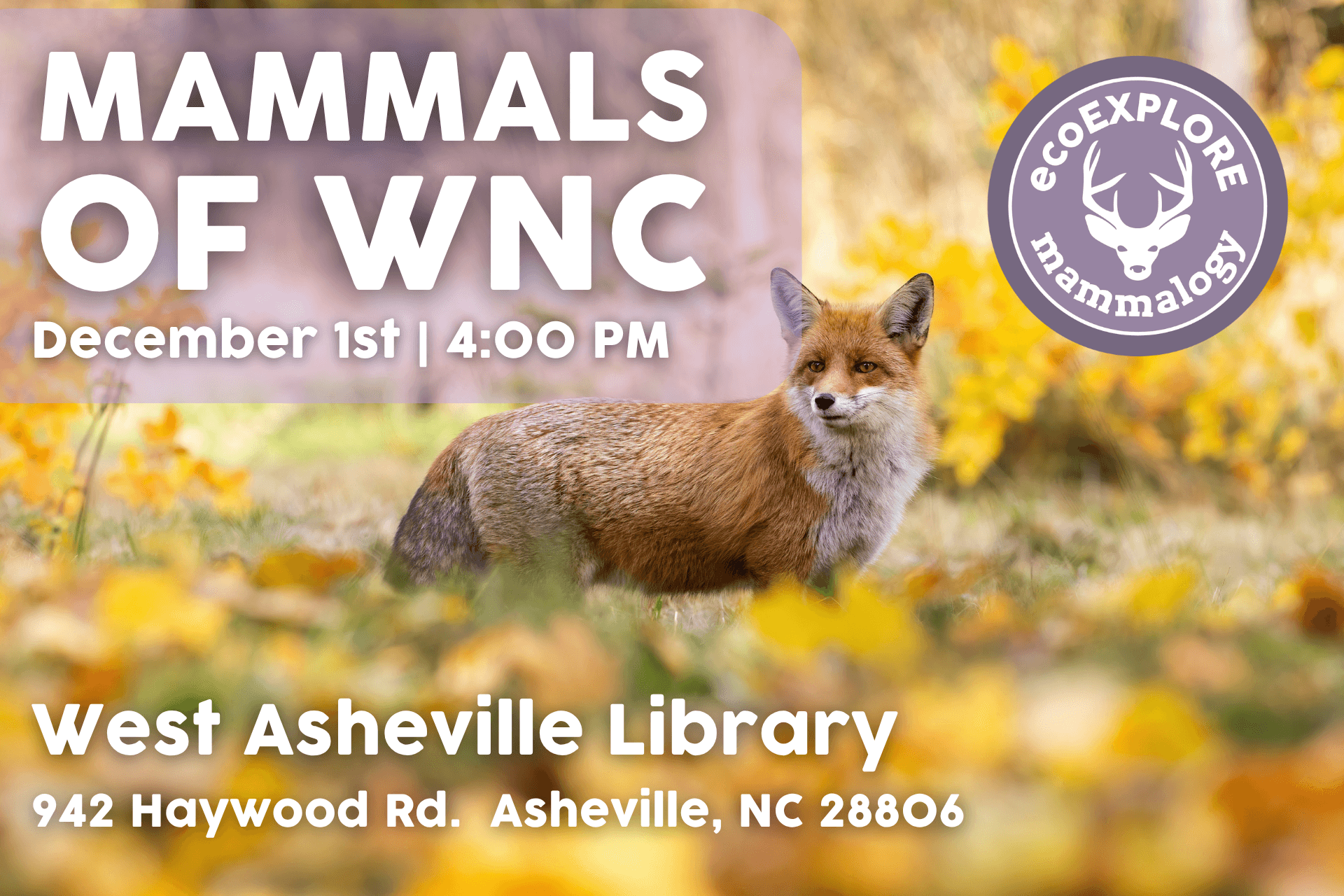
Explore Western North Carolina mammals through questions about hibernation and wildlife tracking, with close-up looks at real skulls and skins and an introduction to the ecoEXPLORE citizen science program.
Explore Western North Carolina mammals through questions about hibernation and wildlife tracking, with close-up looks at real skulls and skins and an introduction to the ecoEXPLORE citizen science program.
Explore Western North Carolina mammals through questions about hibernation and wildlife tracking, with close-up looks at real skulls and skins and an introduction to the ecoEXPLORE citizen science program.
Explore Western North Carolina mammals through ecoEXPLORE, examining skulls and skins while learning what defines a mammal and discovering local wildlife diversity. Designed for K–8 students; registration is required.
Explore Western North Carolina mammals through ecoEXPLORE, examining skulls and skins while learning what defines a mammal and discovering local wildlife diversity. Designed for K–8 students; registration is required.
Explore Western North Carolina mammals through ecoEXPLORE, examining skulls and skins while learning what defines a mammal and discovering local wildlife diversity. Designed for K–8 students; registration is required.
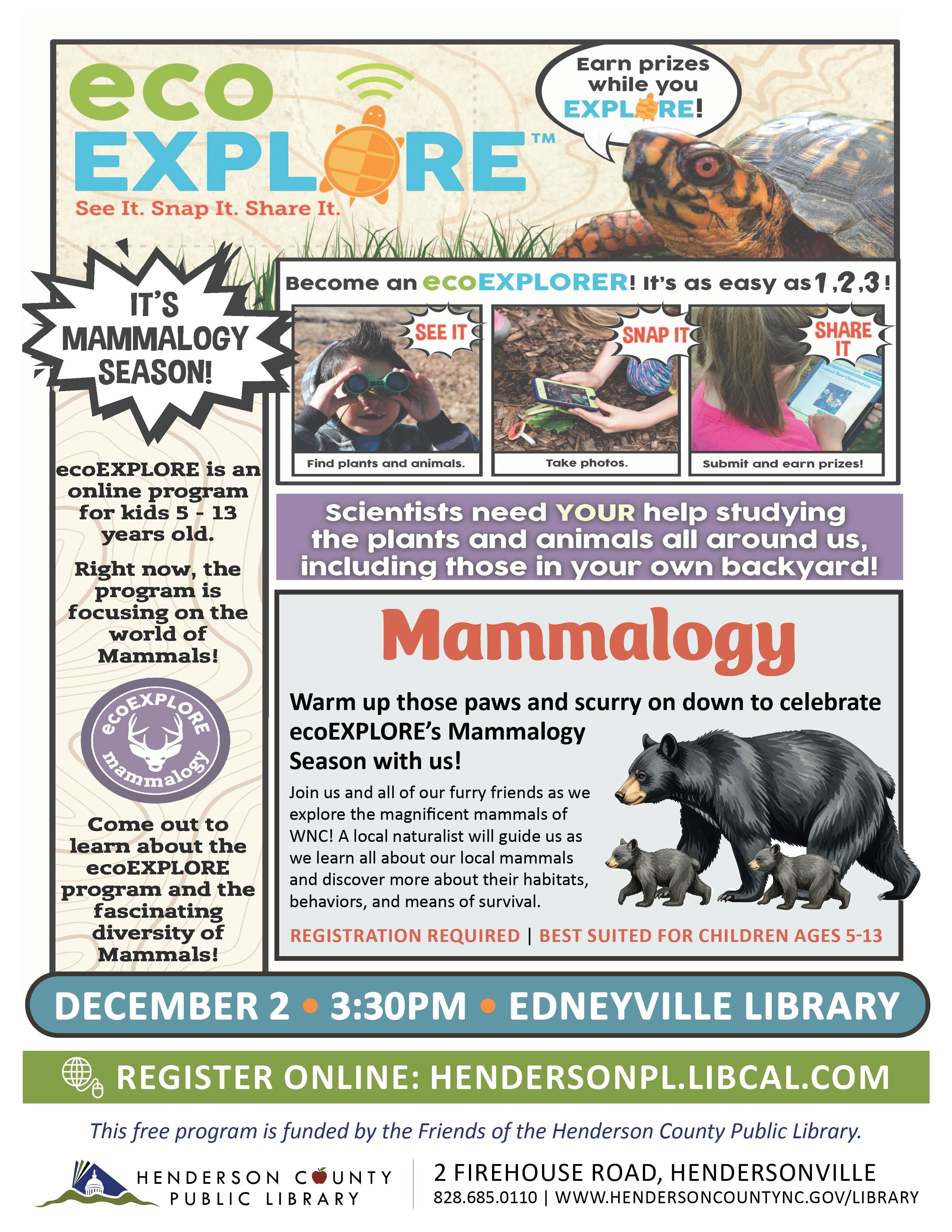
A local naturalist guides children through Western North Carolina’s mammals, exploring habitats, behavior, and survival adaptations. This free, registration-required learning program is designed for ages 5–13.
A local naturalist guides children through Western North Carolina’s mammals, exploring habitats, behavior, and survival adaptations. This free, registration-required learning program is designed for ages 5–13.
A local naturalist guides children through Western North Carolina’s mammals, exploring habitats, behavior, and survival adaptations. This free, registration-required learning program is designed for ages 5–13.
Explore Arboretum trails with staff naturalists, observing flora, fauna, and intriguing natural phenomena. This guided outdoor learning walk invites curious participants to notice ecological details and ask questions.
Explore Arboretum trails with staff naturalists, observing flora, fauna, and intriguing natural phenomena. This guided outdoor learning walk invites curious participants to notice ecological details and ask questions.
Explore Arboretum trails with staff naturalists, observing flora, fauna, and intriguing natural phenomena. This guided outdoor learning walk invites curious participants to notice ecological details and ask questions.
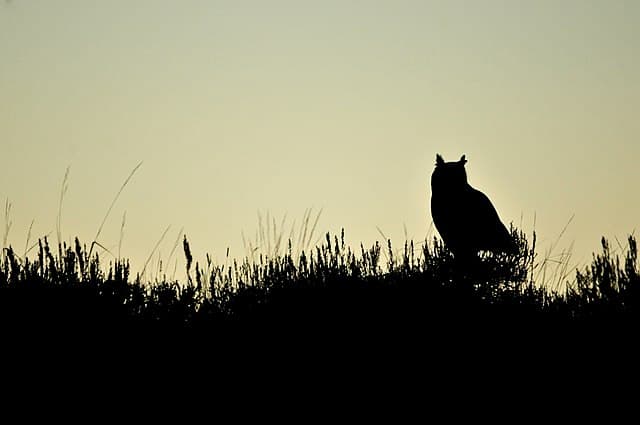
A biologist explains how artificial light disrupts amphibians, birds, mammals, and insects, connecting dark-sky protection with biodiversity conservation and practical ways households can reduce nighttime illumination.
A biologist explains how artificial light disrupts amphibians, birds, mammals, and insects, connecting dark-sky protection with biodiversity conservation and practical ways households can reduce nighttime illumination.
A biologist explains how artificial light disrupts amphibians, birds, mammals, and insects, connecting dark-sky protection with biodiversity conservation and practical ways households can reduce nighttime illumination.
Examine winter buds and bark on common trees along the Arboretum trails, learning the distinctive visual characteristics that help identify Asheville-area species.
Examine winter buds and bark on common trees along the Arboretum trails, learning the distinctive visual characteristics that help identify Asheville-area species.
Examine winter buds and bark on common trees along the Arboretum trails, learning the distinctive visual characteristics that help identify Asheville-area species.
A relaxed beginner birdwatching walk explores garden paths and wooded trails in search of Asheville’s most colorful resident birds. Learn to observe local wildlife while enjoying the Arboretum’s landscapes.
A relaxed beginner birdwatching walk explores garden paths and wooded trails in search of Asheville’s most colorful resident birds. Learn to observe local wildlife while enjoying the Arboretum’s landscapes.
A relaxed beginner birdwatching walk explores garden paths and wooded trails in search of Asheville’s most colorful resident birds. Learn to observe local wildlife while enjoying the Arboretum’s landscapes.
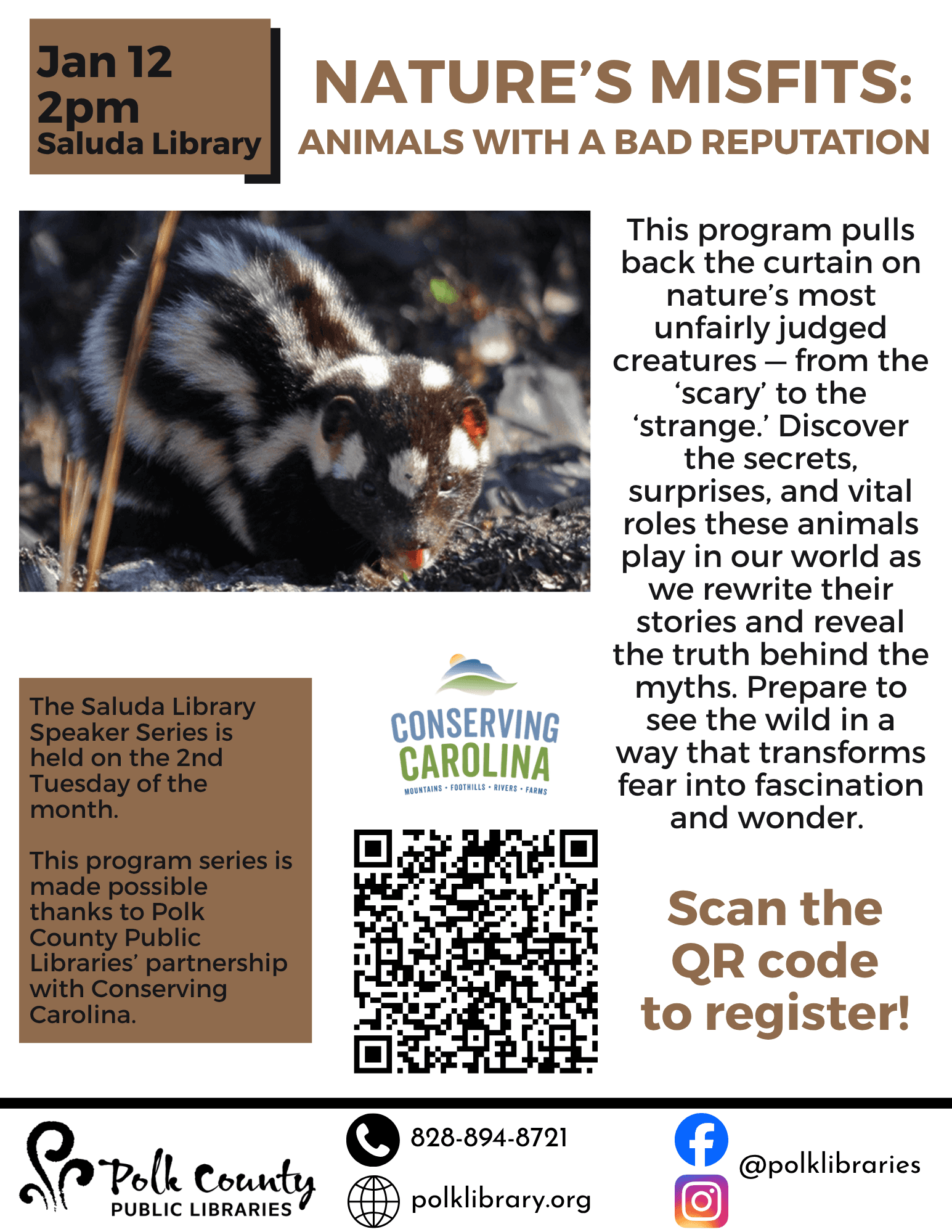
Explore the surprising behaviors and ecological importance of misunderstood wildlife, from creatures deemed scary to those seen as strange. A nature education program turns fear into fascination and challenges common animal myths.
Explore the surprising behaviors and ecological importance of misunderstood wildlife, from creatures deemed scary to those seen as strange. A nature education program turns fear into fascination and challenges common animal myths.
Explore the surprising behaviors and ecological importance of misunderstood wildlife, from creatures deemed scary to those seen as strange. A nature education program turns fear into fascination and challenges common animal myths.
Explore zine history and observation as a creative practice, then assemble a handmade nature zine with varied materials. This tactile workshop blends field-inspired noticing, independent publishing, and visual storytelling.
Explore zine history and observation as a creative practice, then assemble a handmade nature zine with varied materials. This tactile workshop blends field-inspired noticing, independent publishing, and visual storytelling.
Explore zine history and observation as a creative practice, then assemble a handmade nature zine with varied materials. This tactile workshop blends field-inspired noticing, independent publishing, and visual storytelling.
An expert-led winter woods walk teaches tree identification through bark, branching, and other leafless clues. Naturalists explore seasonal forest ecology and sharpen their field observation skills near Waynesville.
An expert-led winter woods walk teaches tree identification through bark, branching, and other leafless clues. Naturalists explore seasonal forest ecology and sharpen their field observation skills near Waynesville.
An expert-led winter woods walk teaches tree identification through bark, branching, and other leafless clues. Naturalists explore seasonal forest ecology and sharpen their field observation skills near Waynesville.
Little hands explore animal-inspired polar crafts in a playful program designed for ages 2–5. A cozy winter activity gives toddlers a chance to create and enjoy a hands-on outing.
Little hands explore animal-inspired polar crafts in a playful program designed for ages 2–5. A cozy winter activity gives toddlers a chance to create and enjoy a hands-on outing.
Little hands explore animal-inspired polar crafts in a playful program designed for ages 2–5. A cozy winter activity gives toddlers a chance to create and enjoy a hands-on outing.
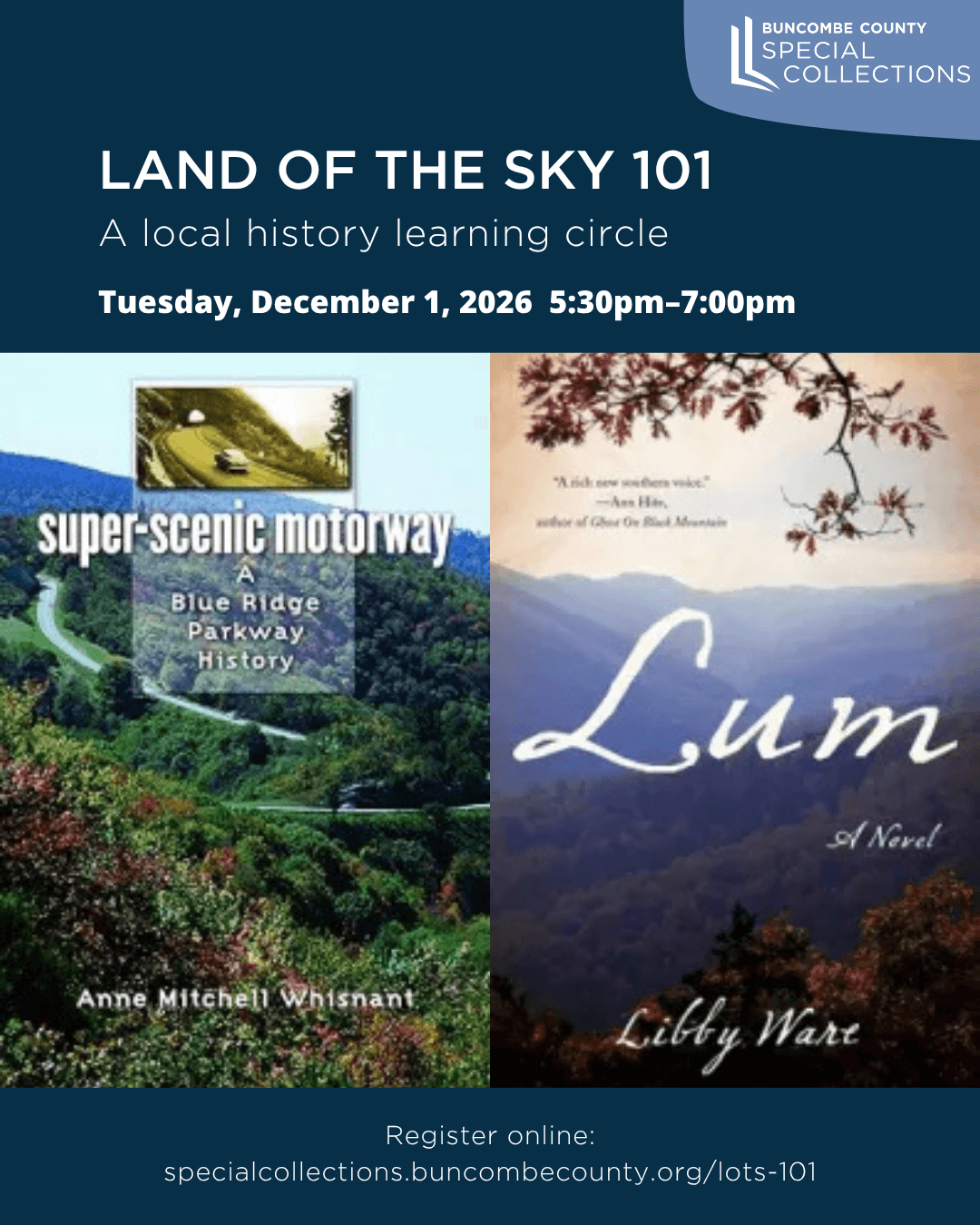
Explore Asheville, Buncombe County, and Western North Carolina history through readings and guided discussions inspired by themes from a local exhibit. The four-part series brings curious community members together for regional learning.
Explore Asheville, Buncombe County, and Western North Carolina history through readings and guided discussions inspired by themes from a local exhibit. The four-part series brings curious community members together for regional learning.
Explore Asheville, Buncombe County, and Western North Carolina history through readings and guided discussions inspired by themes from a local exhibit. The four-part series brings curious community members together for regional learning.
Plant Ecology
MoreExplore how plants interact with one another and with fungi, insects, and other organisms, building a deeper understanding of ecological relationships and the living systems around us.
Explore how plants interact with one another and with fungi, insects, and other organisms, building a deeper understanding of ecological relationships and the living systems around us.
Explore how plants interact with one another and with fungi, insects, and other organisms, building a deeper understanding of ecological relationships and the living systems around us.
Little hands explore polar-themed crafts and tiny-paw creations in a playful winter activity designed for children ages 2–5, with registration through Asheville Parks & Recreation.
Little hands explore polar-themed crafts and tiny-paw creations in a playful winter activity designed for children ages 2–5, with registration through Asheville Parks & Recreation.
Little hands explore polar-themed crafts and tiny-paw creations in a playful winter activity designed for children ages 2–5, with registration through Asheville Parks & Recreation.
Slow, mindful wandering in the Blue Ridge Mountains invites nature connection and reflection on the wisdom of the Winter Solstice. An immersive afternoon retreat centered on seasonal awareness and time outdoors.
Slow, mindful wandering in the Blue Ridge Mountains invites nature connection and reflection on the wisdom of the Winter Solstice. An immersive afternoon retreat centered on seasonal awareness and time outdoors.
Slow, mindful wandering in the Blue Ridge Mountains invites nature connection and reflection on the wisdom of the Winter Solstice. An immersive afternoon retreat centered on seasonal awareness and time outdoors.
Hands-on workshop on creating plant vouchers—pressed botanical specimens paired with clear labels and documentation. Learn practical herbarium-style preparation techniques while making artistic, functional records for study and collection.
Hands-on workshop on creating plant vouchers—pressed botanical specimens paired with clear labels and documentation. Learn practical herbarium-style preparation techniques while making artistic, functional records for study and collection.
Hands-on workshop on creating plant vouchers—pressed botanical specimens paired with clear labels and documentation. Learn practical herbarium-style preparation techniques while making artistic, functional records for study and collection.